 Donna Walsifer
time to catch up


Recently, I wrote about our visit to Charleston while it was fresh in my memory. However, that meant some of the dishes I prepared before and after our trip got pushed aside. My husband loves stew and I found a recipe on NYTCooking app for Slower Cooker Beef Stew by Sarah DiGregorio. Two soups made the rotation in our house starting with Creamy Pumpkin Soup from the website “The Kitchn” and Celery-Leek Soup with Potato and Parsley from Alexa Weibel from NYTCooking app. In our weekly CSA email from Dreyer Farm, they include not only storage guides for the produce we receive each week, but recipes too. One such recipe was for Baked Buffalo Cauliflower Bites that makes a great snack whether while watching football or as an appetizer for the Thanksgiving holiday. Our CSA box this fall provided us with a nice variety of apples. Not knowing what type of apples they were, I decided to cook with them in several recipes. The first was Skillet Pork Chops with Apples and Onions, next was Pan Seared Spicy Pork Chops with Apples, and lastly, Braised Red Cabbage with Apples.
In one of our fall CSA boxes, we received a cheese pumpkin. Not sure what I would make with it; I started by cutting it into wedges and roasting it. Once the pumpkin was cooked and cooled, I scraped out the flesh, puréed it, put it into containers and froze a majority of it. A little internet sleuthing and I found a pumpkin soup recipe on the website “the kitchn.” Besides pumpkin puree (you can used canned pumpkin), you’ll need an onion, fresh garlic, fresh thyme, olive oil, kosher salt, cumin, freshly ground black pepper, ground ginger, cayenne, vegetable broth, maple syrup and heavy cream.
The recipe starts by sautéing the aromatics, onion and garlic, in olive oil until fragrant. Next, the thyme, pumpkin puree, salt, cumin, black pepper, ginger and cayenne pepper are added until it too becomes fragrant. The vegetable stock is added and cooks for several minutes. Off heat, the maple syrup and heavy cream are added. For a creamier soup I used by KitchenAid®️ K400 Blender. To garnish, you can use pumpkin seeds or flaky sea salt, I used extra virgin olive oil. The soup was scrumptious, it had a silky texture, the flavors were well balanced. Some cooks commented it was too salty, but you need to make sure you use KOSHER salt and not table salt as the results will be different. The 1/8 teaspoon of cayenne provided a nice kick to the soup, but it wasn’t overpowering. The pumpkin to liquid ratio was perfect, however, some cooks complained it was either too thick or not thick enough. My husband and I enjoyed it and it was a nice change.
My husband enjoys one pot meals such as stews or stir-fry’s. Although I’ve been preparing a beef stew recipe by Williams-Sonoma, there’s always a place to try something new. I found Sarah DiGregorio’s recipe on the NYTCooking app. Whether in a slow cooker or Dutch oven in a low oven, the recipe sounded appealing. She recommends purchasing a chuck roast instead of stew meat as you want 2-inch chunks for this recipe, pre-cut stew meat will be too small. You’ll also need carrots, parsnips, russet potatoes, fresh thyme, fresh rosemary, stout beer or beef broth, maple syrup, fresh garlic, onion powder, garlic powder, balsamic vinegar, kosher salt and black pepper.
Did I read the recipe directions ahead of time? No, that’s when I realized if I was going to use my slow cooker, I needed 10-12 hours on a low setting. If I used a Dutch oven and baked in a slow oven, that would take 2-3 hours…yikes! Enter my trusty Fagor pressure cooker. My late mother used a one when I was growing up. It was only natural that I wanted one too. Preparing stew in a pressure cooker means it cooks for a fraction of time compared to the oven or slow cooker.
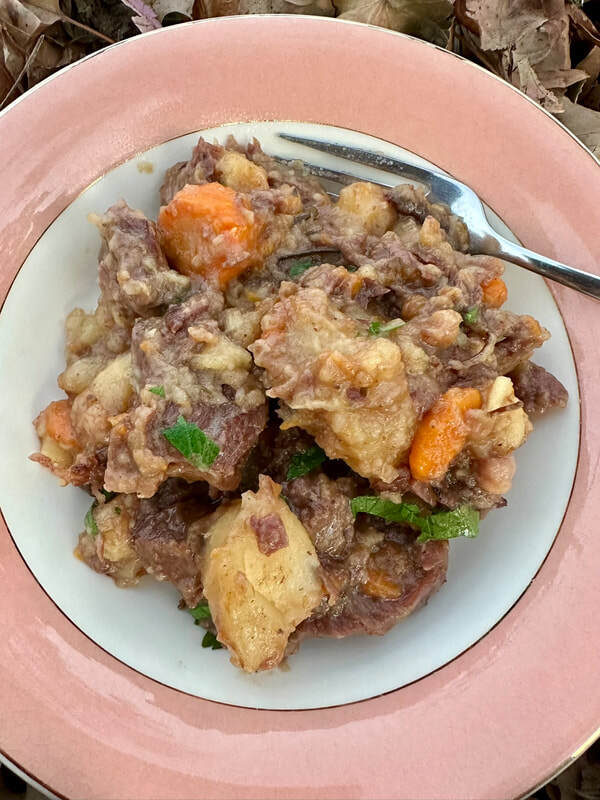
For this recipe all the vegetables were cut into 1-1/2-inch chunks. I purchased a chuck roast and trimmed and cut that into 2-inch chunks. I considered purchasing a can of stout, but what would I do with the rest of the beer as I only need 1/3 cup; I used beef stock instead. I seared the meat in a bit of oil prior to adding vegetables, herbs, beef stock, maple syrup, fresh garlic, both onion and garlic powders and a teaspoon of balsamic vinegar.
Once the timer was up on the pressure cooker, I did a quick release of steam (placed part of the pot under cold water until the pressure gauge dropped) and removed the lid. The stew is finished with two additional teaspoons of vinegar and salt and pepper adjusted. Overall, the stew had a delicious flavor. The vegetables and meat were fork tender. The balsamic vinegar added a brightness to the stew. However, there wasn’t much liquid after cooking. The root vegetables soaked up a lot of the liquid. Some cooks commented on the limited amount of liquid in the recipe and others replied that a slower cooker would produce a sufficient of amount liquid. I thought the same was true of a pressure cooker, but no. Next time I’ll up the amount of beef stock and maple syrup.
I purchased a package of organic celery containing two heads of celery for my pea soup recipe that only needed several stalks. In a prior week’s CSA box, I had two large leeks that were beginning to look a bit tired. That’s when I came across Alexa Weibel’s recipe on the NYTCooking website for Celery-Leek Soup with Potato and Parsley. For the recipe you’ll also need extra-virgin olive oil, fresh garlic, kosher salt, freshly ground black pepper, a russet potato, fresh bay leaves, fresh thyme, dry white wine, chicken stock and fresh parsley.
In a large stock pot with olive oil, the leeks and garlic are sautéed seasoned with salt and pepper. Thinly sliced celery, chopped potato, bay leaves and thyme are added and seasoned with salt and pepper and cooked until softened. The pan is deglazed with white wine and everything cooks until the pot is almost dry. Stock is added and brought to a boil, the heat reduced and the vegetables simmer for approximately 20 minutes.
The pot is removed from the stove; the bay leaves are removed and a cup of parsley leaves added. Using my KitchenAid blender again, the soup was puréed until smooth. The seasoning is adjusted before serving. You can garnish the soup with celery leaves and parsley along with a dollop of crème fraîche or heavy cream, I opted for EVOO.
What a pleasant surprise, the soup was delicious. I would never have thought of celery soup, however, combined with the potato and leek it was silky smooth. The herbs lent a lovely taste to the soup, the bay leaves with herbal, minty notes and the thyme providing a light aromatic taste. Overall, a delightful soup.
The apples were used in savory dishes. The first is from “Southern Living Magazine,” Skillet Pork Chops with Apples and Onions. Besides the aforementioned ingredients in the title, you’ll also need kosher salt, freshly ground black pepper, olive oil, an onion, chicken broth, whipping cream, Dijon mustard, bourbon and fresh thyme sprigs.
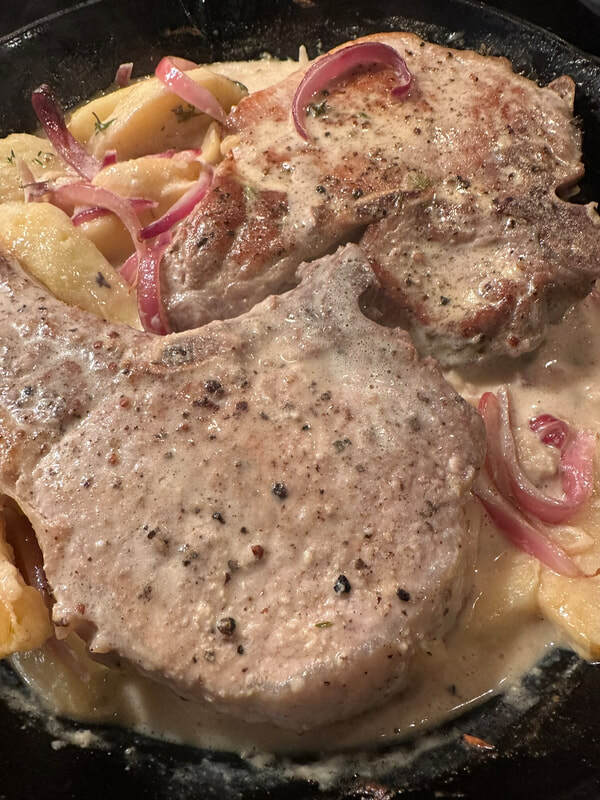
I seasoned the pork chops with salt and pepper and using a cast iron skillet, sautéed them in a bit of olive oil just until browned on both sides. I removed the pork chops and added apple wedges and sliced onion and cooked until lightly browned. Next, broth was added to the pan and the fond was scraped off the bottom of the skillet. The cream and mustard are whisked together and slowly added to the pan; this cooks for a minute or two or until bubbly. Off heat, the bourbon is added and the pork is added back to the pan and turned several times to coat with the sauce. The pork chops are topped with the apple and onion mixture along with sprigs of thyme and placed in the oven just until the sauce begins to bubble.
I must say, this was a wonderful meal. The pork chops were perfectly cooked, slightly pink inside. The sauce had a nice complexity to it with the bourbon and its lovely vanilla and honey flavor, the mustard adding a bit of tang and apples adding some sweetness. A perfect weeknight meal prepared in about 45 minutes.
Our next pork chop recipe was Sweet and Spicy Pan-Seared Pork Chops from Ali Slagle of The New York Times/NYTCooking. For this 30-minute recipe you’ll need light brown sugar, salt, whiskey or apple cider vinegar, unsulphured molasses, neutral oil, fresh ginger and unsalted butter.
The chops are seasoned with salt and pepper and coated with the brown sugar. A mixture of brown sugar, water, whiskey (or apple cider vinegar) and molasses is whisked together and set aside. The pork chops are cooked in a skillet with oil until they reach an internal temperature of 110 to 120 degrees at the thickest part. Next, the pork chops are topped with thinly sliced ginger and butter is added to the pan then spooned over the pork chops after melting. This is done until the internal temperature reaches 135 degrees. The pork is removed from the skillet and the molasses mixture is added to the pan and simmered until it has the consistency of maple syrup. Off heat, finely grated ginger is added to the pan and the ginger slices removed before serving.
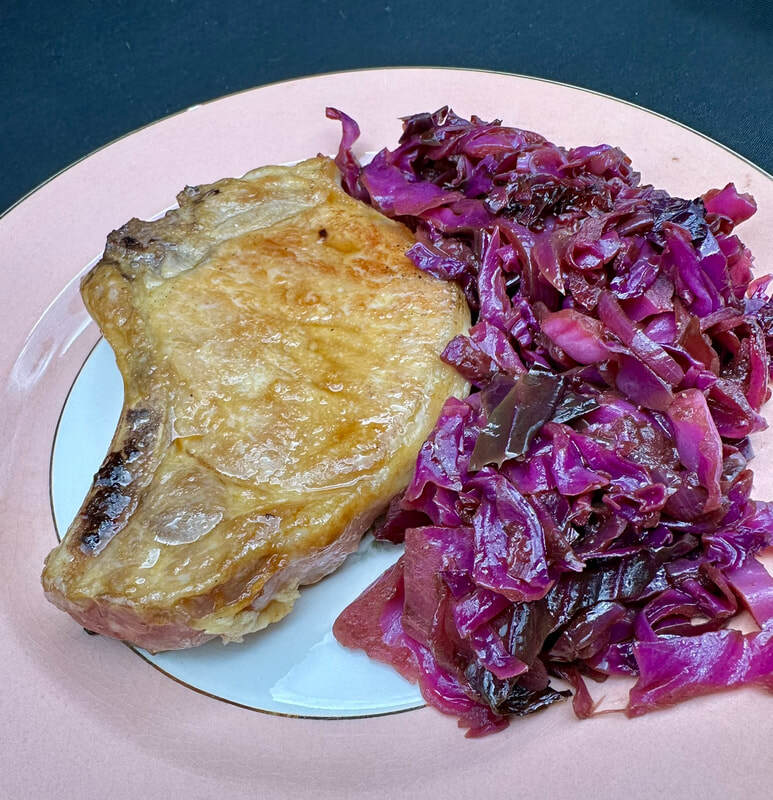
This was an interesting dish. The pork was a lovely golden brown and the combination of molasses, ginger and brown sugar made for a tasty sauce that wasn’t too sweet nor very spicy. I used apple cider vinegar instead of whiskey, but I think the whiskey would have added a nicer complexity to the sauce than the vinegar which seemed to brighten the flavors. The pork was pink, tender and moist.
Alongside the pork I served Braised Red Cabbage with Apples, a recipe by Martha Rose Shulman that I found on the same website as the sweet and spicy pork chops. Besides red cabbage (quartered, cored and cut into thin crosswise strips) you’ll need a neutral oil, an onion, tart apples (peeled, cored and sliced), balsamic vinegar, ground allspice, kosher salt and freshly ground black pepper.
To prepare the cabbage you’re going to need a large saucepan with a lid. The oil is added to the pan and the onion cooked until tender. Part of the balsamic vinegar is added to the pan and mixed with the onions followed by the apples that cook for 2 to 3 minutes. The cabbage is added to the pan and tossed with the onion and apple followed by 2 tablespoons of balsamic vinegar, a bit of allspice and seasoned with salt and pepper. The mixture is covered and cooks until the cabbage is tender. The seasonings are adjusted and additional tablespoon or two of vinegar can be added.
This cabbage was delicious. The combination of apples, onions and the balsamic vinegar gave the cabbage a delightful flavor. The apples provided some sweetness and the balsamic vinegar acidity with a bit of tartness. Red cabbage is very nutritious and contains antioxidants that help to lower blood pressure and reduced the risk of cardiovascular disease.
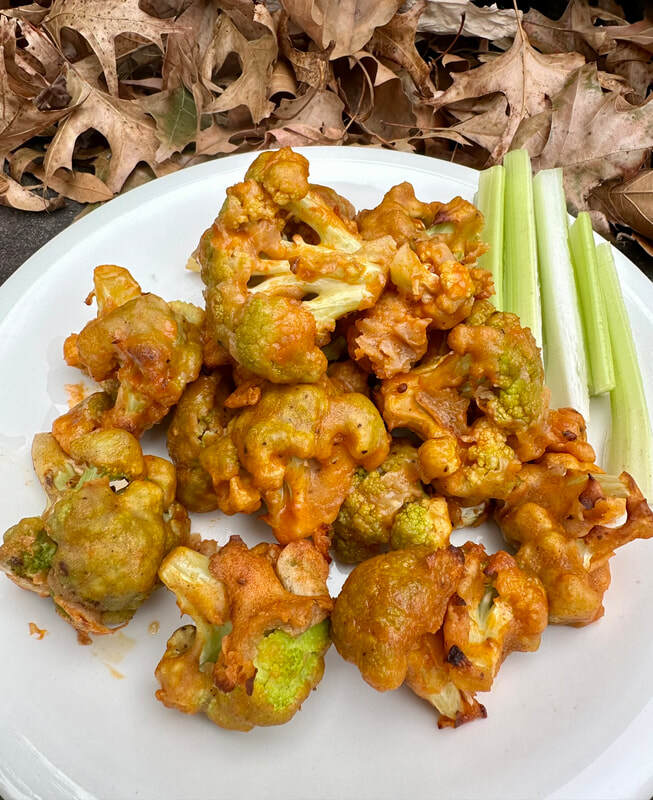
The last recipe I tried was on a whim from the Dreyer Farms weekly CSA email containing a link to a recipe for Baked Buffalo Cauliflower Bites. For this recipe you need to cut the cauliflower into bite size florets.The cauliflower florets are baked in a 450° oven on a baking sheet sprayed with cooking spray or lined with parchment paper. I lined a rimmed baking sheet with foil and sprayed with cooking spray and this worked out well.
The coating is made with flour, water, garlic powder, paprika, salt and black pepper and whisked until smooth. The florets are placed in the batter and coated. Once coated, they’re placed on the baking sheet in a single layer and baked until lightly browned between 20-25 minutes. Half way through turn the florets. While they bake, combine the hot sauce, melted butter and lemon juice. The is removed from the oven brush and the sauce brushed on cauliflower; it bakes for additional 15 minutes or until brown.
Wow, were these delicious and spicy! I’m not one to order hot wings, but I would prepare this at home. The cauliflower had a nice soft crust and the sauce packed a lot of punch. I made a quick homemade ranch dressing to tamper the heat. These would be great for large gathering as they’re a healthy snack and no frying is needed.
The recipe starts by sautéing the aromatics, onion and garlic, in olive oil until fragrant. Next, the thyme, pumpkin puree, salt, cumin, black pepper, ginger and cayenne pepper are added until it too becomes fragrant. The vegetable stock is added and cooks for several minutes. Off heat, the maple syrup and heavy cream are added. For a creamier soup I used by KitchenAid®️ K400 Blender. To garnish, you can use pumpkin seeds or flaky sea salt, I used extra virgin olive oil. The soup was scrumptious, it had a silky texture, the flavors were well balanced. Some cooks commented it was too salty, but you need to make sure you use KOSHER salt and not table salt as the results will be different. The 1/8 teaspoon of cayenne provided a nice kick to the soup, but it wasn’t overpowering. The pumpkin to liquid ratio was perfect, however, some cooks complained it was either too thick or not thick enough. My husband and I enjoyed it and it was a nice change.
My husband enjoys one pot meals such as stews or stir-fry’s. Although I’ve been preparing a beef stew recipe by Williams-Sonoma, there’s always a place to try something new. I found Sarah DiGregorio’s recipe on the NYTCooking app. Whether in a slow cooker or Dutch oven in a low oven, the recipe sounded appealing. She recommends purchasing a chuck roast instead of stew meat as you want 2-inch chunks for this recipe, pre-cut stew meat will be too small. You’ll also need carrots, parsnips, russet potatoes, fresh thyme, fresh rosemary, stout beer or beef broth, maple syrup, fresh garlic, onion powder, garlic powder, balsamic vinegar, kosher salt and black pepper.
Did I read the recipe directions ahead of time? No, that’s when I realized if I was going to use my slow cooker, I needed 10-12 hours on a low setting. If I used a Dutch oven and baked in a slow oven, that would take 2-3 hours…yikes! Enter my trusty Fagor pressure cooker. My late mother used a one when I was growing up. It was only natural that I wanted one too. Preparing stew in a pressure cooker means it cooks for a fraction of time compared to the oven or slow cooker.
For this recipe all the vegetables were cut into 1-1/2-inch chunks. I purchased a chuck roast and trimmed and cut that into 2-inch chunks. I considered purchasing a can of stout, but what would I do with the rest of the beer as I only need 1/3 cup; I used beef stock instead. I seared the meat in a bit of oil prior to adding vegetables, herbs, beef stock, maple syrup, fresh garlic, both onion and garlic powders and a teaspoon of balsamic vinegar.
Once the timer was up on the pressure cooker, I did a quick release of steam (placed part of the pot under cold water until the pressure gauge dropped) and removed the lid. The stew is finished with two additional teaspoons of vinegar and salt and pepper adjusted. Overall, the stew had a delicious flavor. The vegetables and meat were fork tender. The balsamic vinegar added a brightness to the stew. However, there wasn’t much liquid after cooking. The root vegetables soaked up a lot of the liquid. Some cooks commented on the limited amount of liquid in the recipe and others replied that a slower cooker would produce a sufficient of amount liquid. I thought the same was true of a pressure cooker, but no. Next time I’ll up the amount of beef stock and maple syrup.
I purchased a package of organic celery containing two heads of celery for my pea soup recipe that only needed several stalks. In a prior week’s CSA box, I had two large leeks that were beginning to look a bit tired. That’s when I came across Alexa Weibel’s recipe on the NYTCooking website for Celery-Leek Soup with Potato and Parsley. For the recipe you’ll also need extra-virgin olive oil, fresh garlic, kosher salt, freshly ground black pepper, a russet potato, fresh bay leaves, fresh thyme, dry white wine, chicken stock and fresh parsley.
In a large stock pot with olive oil, the leeks and garlic are sautéed seasoned with salt and pepper. Thinly sliced celery, chopped potato, bay leaves and thyme are added and seasoned with salt and pepper and cooked until softened. The pan is deglazed with white wine and everything cooks until the pot is almost dry. Stock is added and brought to a boil, the heat reduced and the vegetables simmer for approximately 20 minutes.
The pot is removed from the stove; the bay leaves are removed and a cup of parsley leaves added. Using my KitchenAid blender again, the soup was puréed until smooth. The seasoning is adjusted before serving. You can garnish the soup with celery leaves and parsley along with a dollop of crème fraîche or heavy cream, I opted for EVOO.
What a pleasant surprise, the soup was delicious. I would never have thought of celery soup, however, combined with the potato and leek it was silky smooth. The herbs lent a lovely taste to the soup, the bay leaves with herbal, minty notes and the thyme providing a light aromatic taste. Overall, a delightful soup.
The apples were used in savory dishes. The first is from “Southern Living Magazine,” Skillet Pork Chops with Apples and Onions. Besides the aforementioned ingredients in the title, you’ll also need kosher salt, freshly ground black pepper, olive oil, an onion, chicken broth, whipping cream, Dijon mustard, bourbon and fresh thyme sprigs.
I seasoned the pork chops with salt and pepper and using a cast iron skillet, sautéed them in a bit of olive oil just until browned on both sides. I removed the pork chops and added apple wedges and sliced onion and cooked until lightly browned. Next, broth was added to the pan and the fond was scraped off the bottom of the skillet. The cream and mustard are whisked together and slowly added to the pan; this cooks for a minute or two or until bubbly. Off heat, the bourbon is added and the pork is added back to the pan and turned several times to coat with the sauce. The pork chops are topped with the apple and onion mixture along with sprigs of thyme and placed in the oven just until the sauce begins to bubble.
I must say, this was a wonderful meal. The pork chops were perfectly cooked, slightly pink inside. The sauce had a nice complexity to it with the bourbon and its lovely vanilla and honey flavor, the mustard adding a bit of tang and apples adding some sweetness. A perfect weeknight meal prepared in about 45 minutes.
Our next pork chop recipe was Sweet and Spicy Pan-Seared Pork Chops from Ali Slagle of The New York Times/NYTCooking. For this 30-minute recipe you’ll need light brown sugar, salt, whiskey or apple cider vinegar, unsulphured molasses, neutral oil, fresh ginger and unsalted butter.
The chops are seasoned with salt and pepper and coated with the brown sugar. A mixture of brown sugar, water, whiskey (or apple cider vinegar) and molasses is whisked together and set aside. The pork chops are cooked in a skillet with oil until they reach an internal temperature of 110 to 120 degrees at the thickest part. Next, the pork chops are topped with thinly sliced ginger and butter is added to the pan then spooned over the pork chops after melting. This is done until the internal temperature reaches 135 degrees. The pork is removed from the skillet and the molasses mixture is added to the pan and simmered until it has the consistency of maple syrup. Off heat, finely grated ginger is added to the pan and the ginger slices removed before serving.
This was an interesting dish. The pork was a lovely golden brown and the combination of molasses, ginger and brown sugar made for a tasty sauce that wasn’t too sweet nor very spicy. I used apple cider vinegar instead of whiskey, but I think the whiskey would have added a nicer complexity to the sauce than the vinegar which seemed to brighten the flavors. The pork was pink, tender and moist.
Alongside the pork I served Braised Red Cabbage with Apples, a recipe by Martha Rose Shulman that I found on the same website as the sweet and spicy pork chops. Besides red cabbage (quartered, cored and cut into thin crosswise strips) you’ll need a neutral oil, an onion, tart apples (peeled, cored and sliced), balsamic vinegar, ground allspice, kosher salt and freshly ground black pepper.
To prepare the cabbage you’re going to need a large saucepan with a lid. The oil is added to the pan and the onion cooked until tender. Part of the balsamic vinegar is added to the pan and mixed with the onions followed by the apples that cook for 2 to 3 minutes. The cabbage is added to the pan and tossed with the onion and apple followed by 2 tablespoons of balsamic vinegar, a bit of allspice and seasoned with salt and pepper. The mixture is covered and cooks until the cabbage is tender. The seasonings are adjusted and additional tablespoon or two of vinegar can be added.
This cabbage was delicious. The combination of apples, onions and the balsamic vinegar gave the cabbage a delightful flavor. The apples provided some sweetness and the balsamic vinegar acidity with a bit of tartness. Red cabbage is very nutritious and contains antioxidants that help to lower blood pressure and reduced the risk of cardiovascular disease.
The last recipe I tried was on a whim from the Dreyer Farms weekly CSA email containing a link to a recipe for Baked Buffalo Cauliflower Bites. For this recipe you need to cut the cauliflower into bite size florets.The cauliflower florets are baked in a 450° oven on a baking sheet sprayed with cooking spray or lined with parchment paper. I lined a rimmed baking sheet with foil and sprayed with cooking spray and this worked out well.
The coating is made with flour, water, garlic powder, paprika, salt and black pepper and whisked until smooth. The florets are placed in the batter and coated. Once coated, they’re placed on the baking sheet in a single layer and baked until lightly browned between 20-25 minutes. Half way through turn the florets. While they bake, combine the hot sauce, melted butter and lemon juice. The is removed from the oven brush and the sauce brushed on cauliflower; it bakes for additional 15 minutes or until brown.
Wow, were these delicious and spicy! I’m not one to order hot wings, but I would prepare this at home. The cauliflower had a nice soft crust and the sauce packed a lot of punch. I made a quick homemade ranch dressing to tamper the heat. These would be great for large gathering as they’re a healthy snack and no frying is needed.
Pumpkin Soup
By Grace Elkus
From the website “the kitchn”
Serves: 4
Prep: 5 minutes
Cook: 20 minutes
Ingredients
1 medium yellow onion, very finely chopped
3 cloves garlic, finely grated
2 tablespoons fresh thyme leaves (from 1 large bunch), plus more for garnish
2 tablespoons olive oil
1 (15-ounce) can pumpkin purée (about 2 cups)
3/4 teaspoon kosher salt
1/2 teaspoon ground cumin
1/4 teaspoon freshly ground black pepper
1/8 teaspoon ground ginger
1/8 teaspoon cayenne pepper
2 cups low-sodium vegetable broth
2 tablespoons maple syrup
2 tablespoons heavy cream
Toasted pumpkin seeds and flaky sea salt, for serving (optional)
Instructions
Storage Note: Leftovers can be refrigerated in an airtight container for up to 5 days or frozen for up to 2 months.
By Grace Elkus
From the website “the kitchn”
Serves: 4
Prep: 5 minutes
Cook: 20 minutes
Ingredients
1 medium yellow onion, very finely chopped
3 cloves garlic, finely grated
2 tablespoons fresh thyme leaves (from 1 large bunch), plus more for garnish
2 tablespoons olive oil
1 (15-ounce) can pumpkin purée (about 2 cups)
3/4 teaspoon kosher salt
1/2 teaspoon ground cumin
1/4 teaspoon freshly ground black pepper
1/8 teaspoon ground ginger
1/8 teaspoon cayenne pepper
2 cups low-sodium vegetable broth
2 tablespoons maple syrup
2 tablespoons heavy cream
Toasted pumpkin seeds and flaky sea salt, for serving (optional)
Instructions
- Heat 2 tablespoons olive oil in a medium saucepan over medium heat until shimmering. Add 1 very finely chopped medium yellow onion and 3 finely grated garlic cloves and cook until fragrant, 3 to 4 minutes.
- Add 2 tablespoons fresh thyme leaves, 1 (15-ounce) can pumpkin purée, 3/4 teaspoon kosher salt, 1/2 teaspoon ground cumin, 1/4 teaspoon black pepper, 1/8 teaspoon ground ginger, and 1/8 teaspoon cayenne pepper. Cook over medium-low until steaming and fragrant, about 5 minutes.
- Add 2 cups low-sodium vegetable broth and cook, stirring constantly, for 3 to 4 minutes. (The mixture will bubble.)
- Remove the pot from the heat. Add 2 tablespoons maple syrup and 2 tablespoons heavy cream, and stir to combine. (At this point, for a creamier soup, you can use an immersion blender or transfer to a blender to purée until it reaches your desired consistency.)
- Serve warm, garnished with toasted pumpkin seeds, flaky salt, more fresh thyme leaves, and black pepper if desired.
Storage Note: Leftovers can be refrigerated in an airtight container for up to 5 days or frozen for up to 2 months.
Slow-Cooker Beef Stew
By Sarah DiGregorio
The New York Times/NYT Cooking
Time: 10 to 12 hours
Yield: 8 servings
“This super-simple beef stew features spoon-tender chunks of beef and a sauce that gets a deep, dark flavor from stout beer and maple syrup. The recipe calls for carrots, parsnips and potatoes, but feel free to swap in similar quantities of other root vegetables, like turnips and rutabaga, cut into large pieces. But do make sure to avoid precut stew meat from the grocery store, which is often unreliable and cut too small. A chuck roast that you cut yourself is a far better option. You can also make this on the stovetop or in the oven: Season the meat with salt, then sear it in 2 tablespoons vegetable oil over high heat in a Dutch oven. Add the rest of the ingredients, stir to combine, cover and simmer on low (or in a 325-degree oven) for 2 to 3 hours until the meat is very tender and move on to step 2.”
Ingredients
3 large carrots, peeled and cut into 1½-inch chunks
2 large parsnips, peeled and cut into 1½-inch chunks
2 large russet potatoes, peeled and cut into 1½-inch chunks
3 thyme sprigs (or 1 teaspoon dried)
2 rosemary sprigs (or 1 teaspoon dried)
3 to 3½pounds chuck roast, excess fat trimmed, cut into 2-inch chunks
⅓cup stout beer, or beef broth
⅓ cup maple syrup
4garlic cloves, chopped
1 teaspoon onion powder
1 teaspoon garlic powder
3teaspoons balsamic vinegar, preferably aged
Kosher salt and black pepper
Preparation:
Tip - If you have extra time, brown the meat before you start cooking for a richer, more complex flavor: Season it with salt, then work in two batches, searing the meat in 2 tablespoons vegetable oil over high heat. Transfer the meat to the slow cooker, and add a few spoonfuls of water or broth to the pan, and scrape up the browned bits. Add those to the slow cooker, too
By Sarah DiGregorio
The New York Times/NYT Cooking
Time: 10 to 12 hours
Yield: 8 servings
“This super-simple beef stew features spoon-tender chunks of beef and a sauce that gets a deep, dark flavor from stout beer and maple syrup. The recipe calls for carrots, parsnips and potatoes, but feel free to swap in similar quantities of other root vegetables, like turnips and rutabaga, cut into large pieces. But do make sure to avoid precut stew meat from the grocery store, which is often unreliable and cut too small. A chuck roast that you cut yourself is a far better option. You can also make this on the stovetop or in the oven: Season the meat with salt, then sear it in 2 tablespoons vegetable oil over high heat in a Dutch oven. Add the rest of the ingredients, stir to combine, cover and simmer on low (or in a 325-degree oven) for 2 to 3 hours until the meat is very tender and move on to step 2.”
Ingredients
3 large carrots, peeled and cut into 1½-inch chunks
2 large parsnips, peeled and cut into 1½-inch chunks
2 large russet potatoes, peeled and cut into 1½-inch chunks
3 thyme sprigs (or 1 teaspoon dried)
2 rosemary sprigs (or 1 teaspoon dried)
3 to 3½pounds chuck roast, excess fat trimmed, cut into 2-inch chunks
⅓cup stout beer, or beef broth
⅓ cup maple syrup
4garlic cloves, chopped
1 teaspoon onion powder
1 teaspoon garlic powder
3teaspoons balsamic vinegar, preferably aged
Kosher salt and black pepper
Preparation:
- Combine the carrots, parsnips, potatoes, herbs, beef, beer, maple syrup, garlic, onion and garlic powders and 1 teaspoon vinegar in a 5- to 8-quart slow cooker. Season with 2 teaspoons salt and a generous amount of pepper. Mix well to combine (feel free to use your hands). Cook on low until the meat and vegetables are very tender, 10 to 12 hours, stirring the stew once if possible; this helps the beef and vegetables cook more evenly, but if it’s not possible, it will be fine.
- Remove and discard the herb sprigs. Stir in the remaining 2 teaspoons vinegar. Taste and add more salt and pepper if you like. Serve in shallow bowls with the meat, vegetables and some sauce.
Tip - If you have extra time, brown the meat before you start cooking for a richer, more complex flavor: Season it with salt, then work in two batches, searing the meat in 2 tablespoons vegetable oil over high heat. Transfer the meat to the slow cooker, and add a few spoonfuls of water or broth to the pan, and scrape up the browned bits. Add those to the slow cooker, too
Celery-Leek Soup with Potato and Parsley
By Alexa Weibel
The New York Times/NYT Cooking
“Celery is Ready for a Starring Role,”
The New York Times, November 19, 2019
Total time: 45 minutes
Yield: 6 to 8 servings (about 9-1/2 cups)
Ingredients
¼ cup extra-virgin olive oil, plus more for drizzling
2 large leeks (about 10 ounces each), halved lengthwise, thinly sliced crosswise and cleaned (about 3 cups)
3 garlic cloves, sliced
Kosher salt and freshly ground black pepper
1 pound celery (about 1 large bunch), leaves reserved, stalks trimmed, peeled and thinly sliced
1 large russet potato (about 12 ounces), peeled and roughly chopped
3 fresh bay leaves
1½ teaspoons fresh thyme leaves
¼ cup dry white wine
7 cups chicken or vegetable stock
1 cup chopped fresh parsley leaves, plus more for garnish
Crème fraîche or heavy cream, for serving
Preparation
By Alexa Weibel
The New York Times/NYT Cooking
“Celery is Ready for a Starring Role,”
The New York Times, November 19, 2019
Total time: 45 minutes
Yield: 6 to 8 servings (about 9-1/2 cups)
Ingredients
¼ cup extra-virgin olive oil, plus more for drizzling
2 large leeks (about 10 ounces each), halved lengthwise, thinly sliced crosswise and cleaned (about 3 cups)
3 garlic cloves, sliced
Kosher salt and freshly ground black pepper
1 pound celery (about 1 large bunch), leaves reserved, stalks trimmed, peeled and thinly sliced
1 large russet potato (about 12 ounces), peeled and roughly chopped
3 fresh bay leaves
1½ teaspoons fresh thyme leaves
¼ cup dry white wine
7 cups chicken or vegetable stock
1 cup chopped fresh parsley leaves, plus more for garnish
Crème fraîche or heavy cream, for serving
Preparation
- In a large pot, heat the ¼ cup oil over medium. Add the leeks and garlic, season with salt and pepper, and cook, stirring occasionally, until meltingly tender, about 7 minutes.
- Add the celery, potato, bay leaves and thyme, season with salt and pepper, and cook, stirring occasionally, until vegetables are softened, about 5 minutes. Add the wine to deglaze, then cook, stirring occasionally, until liquid is almost dry, about 3 minutes.
- Add the stock and bring to boil over high. Reduce the heat to medium and simmer until all the vegetables are fully tender and soft, about 20 minutes. Discard the bay leaves, then stir in 1 cup parsley leaves.
- Working in two or three batches, transfer the soup to a blender and purée until smooth. (It’s almost always beneficial to let the soup blend for another minute or two past what seems necessary to emulsify as much as possible.) Season generously with salt and pepper.
- Transfer to bowls. Drizzle with olive oil; garnish with reserved celery leaves and parsley, and sprinkle with pepper. Serve with a dollop of crème fraîche or a drizzle of heavy cream.
Skillet Pork Chops with Apples and Onions
By Patricia S. York
“Southern Living Magazine,” August 13, 2021
Active Time: 30 minutes
Total Time: 45 minutes
Yield: 4 servings
Ingredients
4 (6- to 8-oz.) bone-in pork rib chops (1 to 1 ¼ inches thick)
1 teaspoon kosher salt
½ teaspoon freshly ground black pepper
2 tablespoons olive oil
2 Granny Smith apples, cut into ½-inch-thick wedges
1 medium-size yellow onion, thinly sliced (root end intact)
⅓ cup chicken broth
1 cup whipping cream
¼ cup Dijon mustard
2 tablespoons bourbon
8 small fresh thyme sprigs
Directions
By Patricia S. York
“Southern Living Magazine,” August 13, 2021
Active Time: 30 minutes
Total Time: 45 minutes
Yield: 4 servings
Ingredients
4 (6- to 8-oz.) bone-in pork rib chops (1 to 1 ¼ inches thick)
1 teaspoon kosher salt
½ teaspoon freshly ground black pepper
2 tablespoons olive oil
2 Granny Smith apples, cut into ½-inch-thick wedges
1 medium-size yellow onion, thinly sliced (root end intact)
⅓ cup chicken broth
1 cup whipping cream
¼ cup Dijon mustard
2 tablespoons bourbon
8 small fresh thyme sprigs
Directions
- Preheat oven to 450°F. Sprinkle pork with salt and pepper. Cook in hot oil in a 12-inch cast-iron skillet over medium heat 5 to 6 minutes on each side or until golden brown. Remove from skillet.
- Add apples and onion to skillet; cook, stirring occasionally, 4 to 5 minutes or until browned. Remove from skillet.
- Add broth to skillet, and cook 1 to 2 minutes, stirring to loosen browned bits from bottom of skillet. Whisk together cream and mustard; add to skillet, and cook, stirring constantly, 1 to 2 minutes or until bubbly.
- Remove skillet from heat, and stir in bourbon. Add pork, turning to coat, and top with apples, onions, and thyme.
- Bake at 450°F for 10 minutes or until liquid is just beginning to bubble. Let stand in skillet 5 minutes before serving.
Sweet and Spicy Pan-Seared Pork Chops
By Ali Slagle
The New York Times/NYT Cooking
Total Time: 30 minutes
Yield: 2 to 3 servings
Ingredients
2 (1- to 1½-inch-thick) bone-in pork rib chops, patted very dry
1 tablespoon plus 1 teaspoon light brown sugar
Salt
¼ cup whiskey or apple cider vinegar
3 tablespoons unsulphured molasses (see Tip)
1 tablespoon neutral oil, such as canola or grapeseed
1(2-inch) piece ginger, thinly sliced and smashed, plus 1 teaspoon peeled and finely grated
1tablespoon unsalted butter
Preparation
Tip - When shopping, look for unsulphured molasses. For this recipe, light molasses is too mild, and blackstrap is too bitter
By Ali Slagle
The New York Times/NYT Cooking
Total Time: 30 minutes
Yield: 2 to 3 servings
Ingredients
2 (1- to 1½-inch-thick) bone-in pork rib chops, patted very dry
1 tablespoon plus 1 teaspoon light brown sugar
Salt
¼ cup whiskey or apple cider vinegar
3 tablespoons unsulphured molasses (see Tip)
1 tablespoon neutral oil, such as canola or grapeseed
1(2-inch) piece ginger, thinly sliced and smashed, plus 1 teaspoon peeled and finely grated
1tablespoon unsalted butter
Preparation
- Coat the pork chops with 1 teaspoon brown sugar, and sprinkle generously with salt. In a liquid measuring cup or small bowl, stir together 3 tablespoons water, the remaining 1 tablespoon brown sugar, whiskey and molasses. Season with salt.
- In a large skillet, heat the oil over medium. Add the pork chops and cook, flipping every 2 minutes, until browned on the outside and the internal temperature in the thickest part is 110 to 120 degrees, 8 to 10 minutes. Reduce heat if sugar is burning. If your chops have a fat cap, using tongs, stack both chops on top of each other, then grab both chops together and hold upright to sear the fat caps until crisp, about 1 minute.
- Lay the chops back down in a single layer and top with the sliced ginger. Add the butter, tilt the skillet and baste the pork by spooning the melting butter and drippings over the pork until the internal temperature registers 135 degrees, 2 to 3 minutes. Turn off the heat and transfer the pork and ginger to a plate to rest for at least 5 minutes. Pour off all but 2 tablespoons of the fat.
- Pour the molasses mixture into the skillet. Bring to a simmer over medium, standing back as it might sputter or flame. Reduce heat to medium-low and simmer until the sauce resembles maple syrup and coats a spoon, 3 to 5 minutes. It can be tempting to crank the heat, but don’t, or the sauce risks tightening or burning. If your sauce gets too thick, thin with water. Turn off heat and stir in the grated ginger.
- Discard the sliced ginger and stir resting juices into the sauce. Serve the pork chops with a spoonful of the sauce.
Tip - When shopping, look for unsulphured molasses. For this recipe, light molasses is too mild, and blackstrap is too bitter
Braised Red Cabbage with Apples
By Martha Rose Shulman
“Red Cabbage: Versatile, Economical and Tasty,”
The New York Times, “Recipes for Health” column
February 1, 2010
Total Time: 1 hour 15 minutes
Yield: 6 to 8 servings
Ingredients
1 large red cabbage, 2 to 2½ pounds, quartered, cored and cut crosswise in thin strips
2 tablespoons canola oil
1 small onion, thinly sliced
2 tart apples, such as Braeburn or granny smith, peeled, cored and sliced
About ⅓ cup balsamic vinegar
¼ teaspoon ground allspice
Salt
freshly ground pepper to taste
Preparation
Tip - Advance preparation :This dish tastes even better the day after you make it, and it will keep for five days in the refrigerator. Reheat gently. Martha Rose Shulman can be reached at martha-rose-shulman.com
By Martha Rose Shulman
“Red Cabbage: Versatile, Economical and Tasty,”
The New York Times, “Recipes for Health” column
February 1, 2010
Total Time: 1 hour 15 minutes
Yield: 6 to 8 servings
Ingredients
1 large red cabbage, 2 to 2½ pounds, quartered, cored and cut crosswise in thin strips
2 tablespoons canola oil
1 small onion, thinly sliced
2 tart apples, such as Braeburn or granny smith, peeled, cored and sliced
About ⅓ cup balsamic vinegar
¼ teaspoon ground allspice
Salt
freshly ground pepper to taste
Preparation
- Prepare the cabbage, and cover with cold water while you prepare the remaining ingredients. Heat the oil over medium heat in a large, lidded skillet or casserole, and add the onion. Cook, stirring, until just about tender, about three minutes. Add 2 tablespoons of the balsamic vinegar and cook, stirring, until the mixture is golden, about three minutes, then add the apples and stir for two to three minutes.
- Drain the cabbage and add to the pot. Toss to coat thoroughly, then stir in the allspice, another 2 tablespoons balsamic vinegar, and salt to taste. Toss together. Cover the pot, and cook over low heat for one hour, stirring from time to time. Add freshly ground pepper, taste and adjust salt, and add another tablespoon or two of balsamic vinegar as desired.
Tip - Advance preparation :This dish tastes even better the day after you make it, and it will keep for five days in the refrigerator. Reheat gently. Martha Rose Shulman can be reached at martha-rose-shulman.com
Baked Buffalo Cauliflower Bites
By Yumna Jawad
From the website “Feel Good Foodie”
Prep Time: 10 minutes
Cook Time: 40 minutes
Total Time: 50 minutes
Servings: 4
Ingredients
1 large head cauliflower cut into florets
½ cup all-purpose flour
½ cup water
2 teaspoons garlic powder
1 teaspoon paprika
½ teaspoon salt
¼ teaspoon black pepper
cooking spray
½ cup hot sauce
2 tablespoons butter melted
½ tablespoon lemon juice
Ranch or blue cheese dressing for serving
Carrots and celery sticks for serving
Instructions
By Yumna Jawad
From the website “Feel Good Foodie”
Prep Time: 10 minutes
Cook Time: 40 minutes
Total Time: 50 minutes
Servings: 4
Ingredients
1 large head cauliflower cut into florets
½ cup all-purpose flour
½ cup water
2 teaspoons garlic powder
1 teaspoon paprika
½ teaspoon salt
¼ teaspoon black pepper
cooking spray
½ cup hot sauce
2 tablespoons butter melted
½ tablespoon lemon juice
Ranch or blue cheese dressing for serving
Carrots and celery sticks for serving
Instructions
- Preheat oven to 450°F. Grease a baking sheet with cooking spray or line it with parchment paper.
- In a large bowl, whisk flour, water, garlic powder, paprika, salt and pepper until batter is smooth. Add cauliflower to batter and toss to coat.
- Spread cauliflower onto the prepared baking sheet in a single layer with space between them. Bake in the preheated oven until lightly browned, about 20 to 25 minutes, flipping over halfway through.
- In another small bowl, combine the hot sauce, melted butter and lemon juice until well blended. Brush the buffalo sauce mixture on the cauliflower.
- Return to the oven and bake until they start to brown, about 15 minutes.
- Serve hot with ranch dressing, celery and carrots, if desired