 Donna Walsifer
endless cold
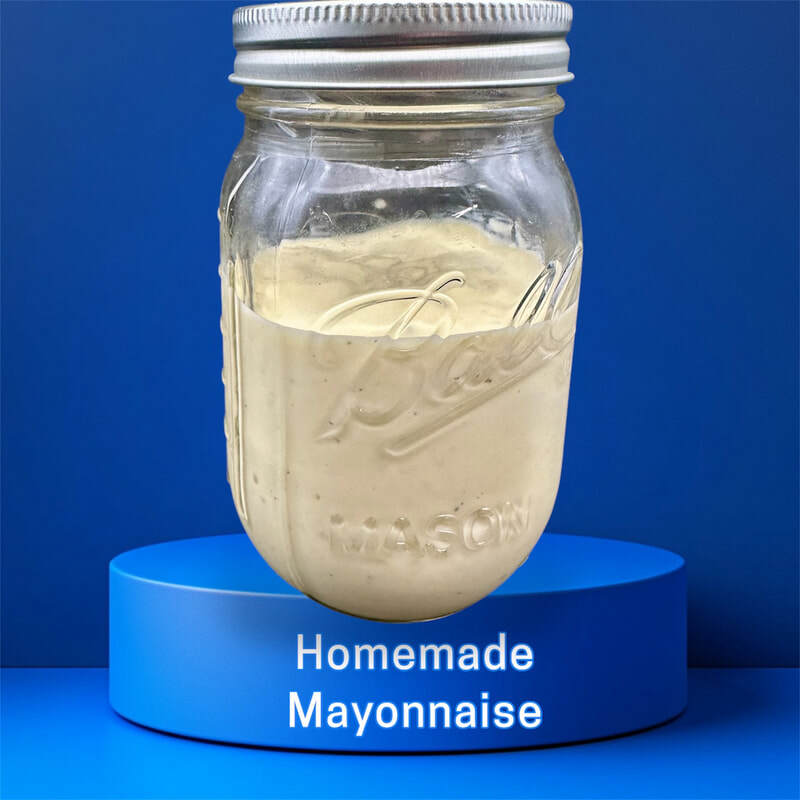
Brr! This winter chill has people hunkered down in their homes. With such cold weather, going to the food store has become my only outdoor activity. I try to avoid making unnecessary trips, which was the case one-day last week. I had run out of mayonnaise and there was no backup in my basement. I couldn’t justify a midweek trip for one item, so I decided to try making mayonnaise using my food processor. I found a recipe I liked on The New York Times/NYT Cooking app by Mark Bittman.
For Mr. Bittman’s recipe you’ll need an egg yolk or whole egg, Dijon mustard, salt, freshly ground black pepper, lemon juice (can use sherry or white wine vinegar) and a neutral oil such as grapeseed, or extra-virgin (or a combination). I pulled out my food processor and added all but the corn oil to the bowl. Using the feed tube and the insert with the tiny hole, I added the oil to the processor until an emulsion was made. After I was done I adjusted the salt and pepper and declared that with little work, I made a fine product. I had my husband taste test it after it was chilled and he was quite satisfied with the results. If I liked he said, I could make this to use for sandwiches.
Mr. Bittman also offers variations such as garlic mayonnaise (aioli), chili, roasted pepper, green sauce (French style) and cold mustard.
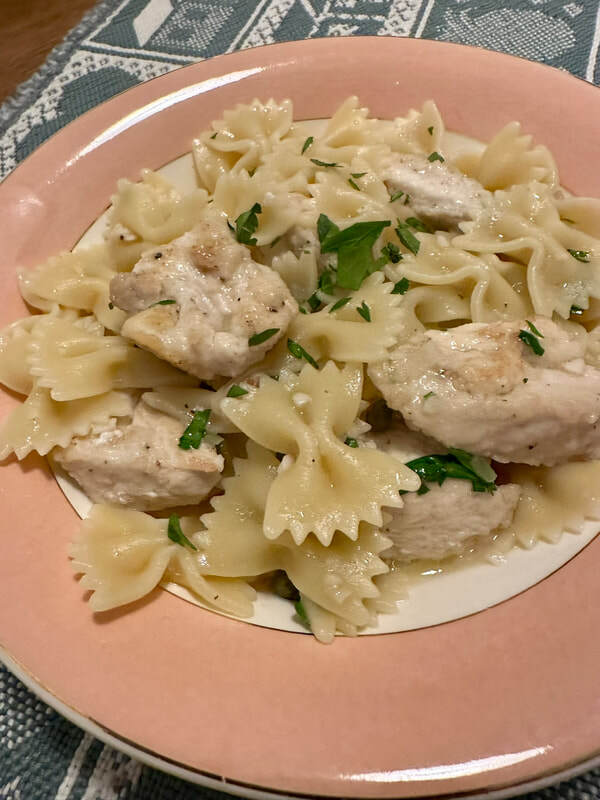
In another New York Times/NYT Cooking newsletter, was a recipe by Christian Reynoso for Chicken Piccata Pasta. His twist on chicken piccata was to combine with pasta. For the recipe you’ll need salt, black pepper, bow tie (farfalle) or another short pasta, boneless and skinless chicken breasts or thighs, unsalted butter, extra-virgin olive oil, a shallot, fresh garlic, chicken stock, lemon juice, drained capers and chopped parsley for garnish.
The pasta is cooked per the box instructions and before draining, a ½ cup of the cooking pasta is removed and saved for later use.
The chicken is cut into ½-inch chunks and tossed with seasoned flour. It is then sautéed in a skillet with a combination of butter and olive oil until cooked through. In the same skillet the shallot and garlic are sautèed until fragrant. Stock is added to the pan and reduced by half. Additional butter, lemon juice and capers are added to complete the sauce. The chicken and pasta are added and tossed until combined.
What a tasty dish! Chicken is a frequent menu item in our house and added it to pasta seemed like a natural. The sauce had a hint of lemon and the brininess from the capers. The flavors were complex, yet balanced. Overall, a scrumptious supper.
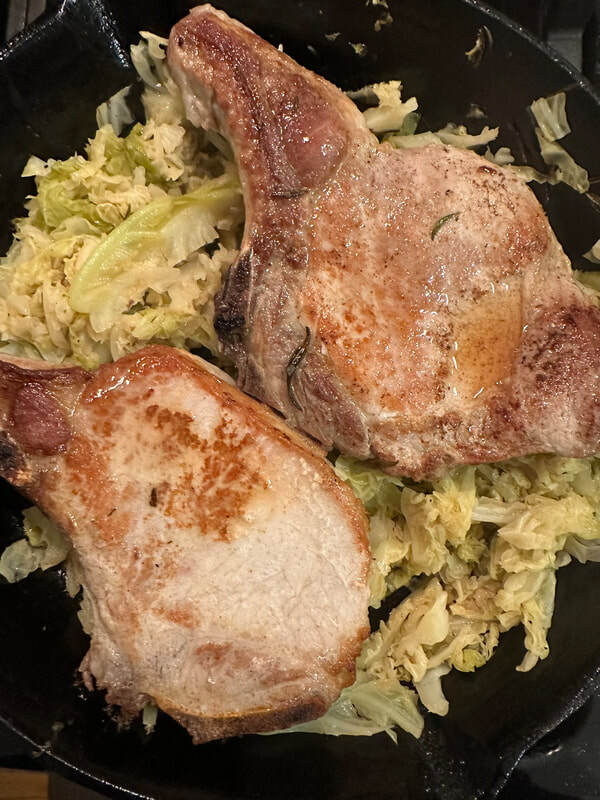
Pork, or sometimes known as the other white meat from an ad campaign in the late 80’s, is usually on our menu once a week. I purchased bone-in pork chops from Perrotti’s Quality Meats in Cranford, NJ. For last week’s supper I went back into my archives for Braised Pork Chops with Savoy Cabbage by Lidia Bastianiach, that prepared back in 2020. This one pot meal is made with Savoy cabbage, butter, extra-virgin olive oil, bone-in loin pork chops, kosher salt, fresh rosemary branches, white wine and freshly ground black pepper.
The cabbage has its outer tough leaves removed and is sliced into 1-1/2-inch strips. The cabbage is boiled in water until tender, then drained and set aside. Meanwhile,
the pork chops are seasoned with salt and set into a large skillet along with butter and rosemary branches and seared on each side, 3 minutes per side. The chops are removed and set aside. Wine is added to the skillet, deglazed and the fond removed from the bottom of the pan. Additional butter and olive oil are added melted. The cabbage is added to the pan and cooked until it starts to caramelize. The cabbage is pushed aside and the pork chops and its juices are added and heated through. As the mixture cooks, the cabbage will absorb the pan flavors.
This was a truly wonderful meal that I haven’t made in such a very long time. Savoy cabbage is slightly sweeter and has a more delicate flavor than regular cabbage. Slightly caramelizing the cabbage added another layer of flavor. The pork chops were succulent and were infused with the flavor of rosemary. This was a tasty way of preparing pork chops and using another type of vegetable as an accompaniment.
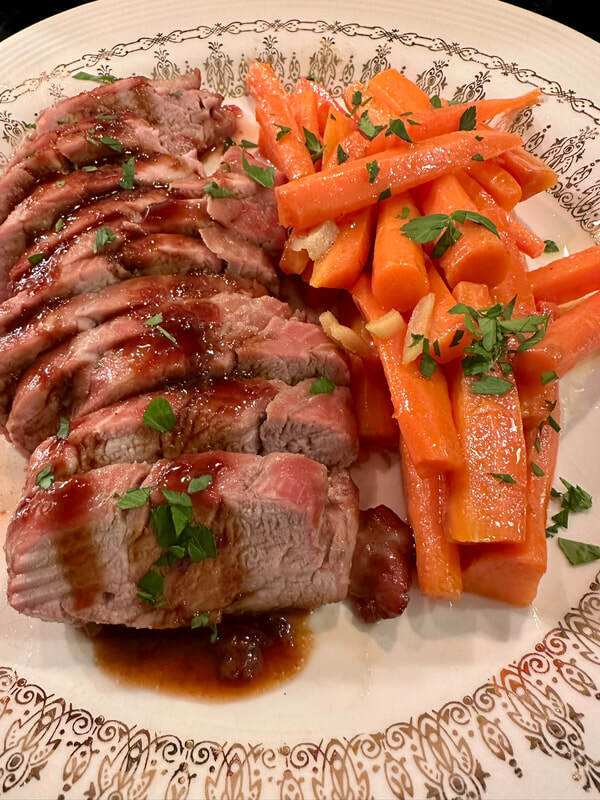
Another recipe from my NYT Cooking newsletter featured another pork recipe, Glazed Pork Tenderloin with Gingery Carrots. This recipe was developed by David Tanis and is perfect either for a weeknight meal or dinner guests. Besides the pork tenderloins you’ll need soy sauce, mirin, brown sugar, fresh garlic, toasted sesame oil, ground cayenne, fresh carrots, unsalted butter, fresh ginger, crushed red pepper and chives or scallions for garnish.
Although the recipe called for marinating the pork overnight, I did it for just an hour with excellent results. The pork is placed in a marinade consisting of soy sauce, mirin, brown sugar, grated fresh garlic, and cayenne. I peeled and cut the carrots into 2-inch batons. The pork and the marinade are baked in the oven for 30 minutes. I timed the cooking of the carrots to begin halfway through the pork’s cooking time. The carrots were placed in a wide shallow skillet sprinkled with salt and cooked with butter, peeled and slivered ginger and water. The water was brought to a boil then reduced until it evaporates and the carrots are tender.
When the pork reached 140°, I removed it from the oven and placed it on a rimmed cutting board. The meat was lightly tented and rested to allow the juices to be retained. The meat was sliced into 1/4-inch pieces. I gently reheated the marinade and spooned it over the meat before serving. Yum, what a delectable meal. The meat was juicy and tender. The soy sauce and mirin provide the base for a teriyaki sauce and by layering in the brown sugar, it adds a hint of sweetness and allows the meat to achieve a glossy exterior. Grated garlic offered a stronger garlic flavor, but dissolved into the sauce.
The French-style carrots were tender and the ginger added another layer of flavor to the sweetness of the cooked carrot. My husband and I enjoyed this slightly savory version of carrots. Overall, a total awesome meal.
Mr. Bittman also offers variations such as garlic mayonnaise (aioli), chili, roasted pepper, green sauce (French style) and cold mustard.
In another New York Times/NYT Cooking newsletter, was a recipe by Christian Reynoso for Chicken Piccata Pasta. His twist on chicken piccata was to combine with pasta. For the recipe you’ll need salt, black pepper, bow tie (farfalle) or another short pasta, boneless and skinless chicken breasts or thighs, unsalted butter, extra-virgin olive oil, a shallot, fresh garlic, chicken stock, lemon juice, drained capers and chopped parsley for garnish.
The pasta is cooked per the box instructions and before draining, a ½ cup of the cooking pasta is removed and saved for later use.
The chicken is cut into ½-inch chunks and tossed with seasoned flour. It is then sautéed in a skillet with a combination of butter and olive oil until cooked through. In the same skillet the shallot and garlic are sautèed until fragrant. Stock is added to the pan and reduced by half. Additional butter, lemon juice and capers are added to complete the sauce. The chicken and pasta are added and tossed until combined.
What a tasty dish! Chicken is a frequent menu item in our house and added it to pasta seemed like a natural. The sauce had a hint of lemon and the brininess from the capers. The flavors were complex, yet balanced. Overall, a scrumptious supper.
Pork, or sometimes known as the other white meat from an ad campaign in the late 80’s, is usually on our menu once a week. I purchased bone-in pork chops from Perrotti’s Quality Meats in Cranford, NJ. For last week’s supper I went back into my archives for Braised Pork Chops with Savoy Cabbage by Lidia Bastianiach, that prepared back in 2020. This one pot meal is made with Savoy cabbage, butter, extra-virgin olive oil, bone-in loin pork chops, kosher salt, fresh rosemary branches, white wine and freshly ground black pepper.
The cabbage has its outer tough leaves removed and is sliced into 1-1/2-inch strips. The cabbage is boiled in water until tender, then drained and set aside. Meanwhile,
the pork chops are seasoned with salt and set into a large skillet along with butter and rosemary branches and seared on each side, 3 minutes per side. The chops are removed and set aside. Wine is added to the skillet, deglazed and the fond removed from the bottom of the pan. Additional butter and olive oil are added melted. The cabbage is added to the pan and cooked until it starts to caramelize. The cabbage is pushed aside and the pork chops and its juices are added and heated through. As the mixture cooks, the cabbage will absorb the pan flavors.
This was a truly wonderful meal that I haven’t made in such a very long time. Savoy cabbage is slightly sweeter and has a more delicate flavor than regular cabbage. Slightly caramelizing the cabbage added another layer of flavor. The pork chops were succulent and were infused with the flavor of rosemary. This was a tasty way of preparing pork chops and using another type of vegetable as an accompaniment.
Another recipe from my NYT Cooking newsletter featured another pork recipe, Glazed Pork Tenderloin with Gingery Carrots. This recipe was developed by David Tanis and is perfect either for a weeknight meal or dinner guests. Besides the pork tenderloins you’ll need soy sauce, mirin, brown sugar, fresh garlic, toasted sesame oil, ground cayenne, fresh carrots, unsalted butter, fresh ginger, crushed red pepper and chives or scallions for garnish.
Although the recipe called for marinating the pork overnight, I did it for just an hour with excellent results. The pork is placed in a marinade consisting of soy sauce, mirin, brown sugar, grated fresh garlic, and cayenne. I peeled and cut the carrots into 2-inch batons. The pork and the marinade are baked in the oven for 30 minutes. I timed the cooking of the carrots to begin halfway through the pork’s cooking time. The carrots were placed in a wide shallow skillet sprinkled with salt and cooked with butter, peeled and slivered ginger and water. The water was brought to a boil then reduced until it evaporates and the carrots are tender.
When the pork reached 140°, I removed it from the oven and placed it on a rimmed cutting board. The meat was lightly tented and rested to allow the juices to be retained. The meat was sliced into 1/4-inch pieces. I gently reheated the marinade and spooned it over the meat before serving. Yum, what a delectable meal. The meat was juicy and tender. The soy sauce and mirin provide the base for a teriyaki sauce and by layering in the brown sugar, it adds a hint of sweetness and allows the meat to achieve a glossy exterior. Grated garlic offered a stronger garlic flavor, but dissolved into the sauce.
The French-style carrots were tender and the ginger added another layer of flavor to the sweetness of the cooked carrot. My husband and I enjoyed this slightly savory version of carrots. Overall, a total awesome meal.
Homemade Mayonnaise
“Food Processor Mayonnaise,”
By Mark Bittman, The New York Times
September 14, 2010
Total Time: 10 minutes
Yield: 1 cup
Ingredients
1 egg yolk or whole egg
2 teaspoons Dijon mustard
Salt and freshly ground black pepper
1 tablespoon lemon juice or sherry or white wine vinegar
1 cup neutral oil, like grapeseed or corn, or extra virgin olive oil, or a combination
Preparation
“Food Processor Mayonnaise,”
By Mark Bittman, The New York Times
September 14, 2010
Total Time: 10 minutes
Yield: 1 cup
Ingredients
1 egg yolk or whole egg
2 teaspoons Dijon mustard
Salt and freshly ground black pepper
1 tablespoon lemon juice or sherry or white wine vinegar
1 cup neutral oil, like grapeseed or corn, or extra virgin olive oil, or a combination
Preparation
- Put the yolk or egg, mustard, salt, pepper and lemon juice or vinegar in the container of a food processor and turn the machine on. While it's running, add the oil in a slow, steady stream. (Your food processor should have a teeny hole you may never have noticed in the insert -- the "food pusher" -- in the top; if it doesn't, you might want a different food processor.). When an emulsion forms you can add it a little faster. (Again, the little hole makes this unnecessary.) Taste and adjust seasoning if necessary.
- Garlic Mayonnaise (Aioli) — Add 2 or more (as many as 8) cloves of garlic, to taste. Oil should be made up of at least half olive oil.
- Chile Mayonnaise — Add 1 or 2 dried chilis, like ancho, Thai, or chipotle, soaked in warm water until soft, then drained, patted dry, and stemmed and seeded. (Or use 1 canned chipotle and a little of its adobo sauce.)
- Roasted Pepper Mayonnaise — Add 1 roasted red, yellow or orange bell pepper.
- Green Sauce, French-Style — Add 1 sprig tarragon, about 10 sprigs of watercress (thick stems removed), 10 chives and the leaves of 5 parsley stems.
- Cold Mustard Sauce — Use 1 heaping tablespoon Dijon-style or whole grain mustard. Thin with a tablespoon or two of cream or sour cream to desired consistency.
Chicken Piccata Pasta
By Christian Reynoso
The New York Times/NYT Cooking
Ready in 40 minutes
Yield: 4 servings
Ingredients
Salt and black pepper
12 ounces bow tie (farfalle) or other short pasta
1¼ to 1½ pounds boneless, skinless chicken breasts or thighs
¼ cup all-purpose flour, plus more if necessary
6 tablespoons unsalted butter, divided
1 tablespoon extra-virgin olive oil
1 large shallot, chopped
4 garlic cloves, chopped
1½ cups chicken stock
¼ cup lemon juice (from 1 to 2 lemons)
2 tablespoons drained capers
Roughly chopped parsley, for serving
Preparation
By Christian Reynoso
The New York Times/NYT Cooking
Ready in 40 minutes
Yield: 4 servings
Ingredients
Salt and black pepper
12 ounces bow tie (farfalle) or other short pasta
1¼ to 1½ pounds boneless, skinless chicken breasts or thighs
¼ cup all-purpose flour, plus more if necessary
6 tablespoons unsalted butter, divided
1 tablespoon extra-virgin olive oil
1 large shallot, chopped
4 garlic cloves, chopped
1½ cups chicken stock
¼ cup lemon juice (from 1 to 2 lemons)
2 tablespoons drained capers
Roughly chopped parsley, for serving
Preparation
- In a large pot of salted boiling water, cook pasta according to package instructions until al dente. Reserve ½ cup cooking water, then drain pasta.
- Meanwhile, cut the chicken into ½-inch chunks and place in a bowl. Season with salt and pepper, then toss with the flour to coat, adding more flour if needed. (If pieces stick together, they can be separated while cooking.)
- In a large skillet, heat 2 tablespoons butter and the olive oil over high. Once the butter is melted and bubbling, add the chicken, working in batches if necessary to avoid crowding and promote browning. Cook, stirring occasionally to help break apart any pieces that are stuck together, until cooked through with some golden spots and edges, using tongs or a slotted spoon to transfer cooked pieces to a plate as they finish.
- Reduce heat to medium-high. Add the shallot and garlic and cook, stirring occasionally, until softened and fragrant, 1 to 2 minutes. Add the stock and simmer until reduced by half, 3 to 5 minutes. Adjust the heat to low and stir in the remaining 4 tablespoons butter, the lemon juice and the capers.
- Season the sauce with salt and pepper to taste, and then return the chicken to the skillet. Add the pasta and toss very well to coat (if more sauce is desired, stir in small splashes of the reserved pasta water), then take the skillet off the heat. Serve topped with the parsley and more black pepper to taste.
Glazed Pork Tenderloin with Gingery Carrots
“This Dinner Party Tenderloin Won’t Break the Bank,”
By David Tanis, The New York Times
February 5, 2026
Total Time: 2 hours 10 minutes
Prep Time: 15 minutes
Cook Time:1 hour 55 minutes
Yield: 4 to 6 servings
Ingredients
2 pork tenderloins (about 1¼ pounds each)
½ cup soy sauce
½ cup mirin
¼ cup brown sugar
4 garlic cloves, grated
1tablespoon toasted sesame oil
¼ teaspoon ground cayenne
1-pound young slender carrots, cut into 2-inch batons
6 tablespoons unsalted butter
1 (1-inch) piece fresh ginger, peeled and slivered
1 teaspoon kosher salt (such as Diamond Crystal)
½ teaspoon crushed red pepper
Chives or scallions, for garnish
Preparation
“This Dinner Party Tenderloin Won’t Break the Bank,”
By David Tanis, The New York Times
February 5, 2026
Total Time: 2 hours 10 minutes
Prep Time: 15 minutes
Cook Time:1 hour 55 minutes
Yield: 4 to 6 servings
Ingredients
2 pork tenderloins (about 1¼ pounds each)
½ cup soy sauce
½ cup mirin
¼ cup brown sugar
4 garlic cloves, grated
1tablespoon toasted sesame oil
¼ teaspoon ground cayenne
1-pound young slender carrots, cut into 2-inch batons
6 tablespoons unsalted butter
1 (1-inch) piece fresh ginger, peeled and slivered
1 teaspoon kosher salt (such as Diamond Crystal)
½ teaspoon crushed red pepper
Chives or scallions, for garnish
Preparation
- Place pork tenderloins in a shallow baking dish. Stir together soy sauce, mirin, brown sugar, garlic, sesame oil and cayenne.
- Pour mixture over pork and coat well. Cover and marinate for at least 1 hour or up to 24 hours, turning occasionally.
- Bake at 375 degrees until a thermometer registers 130 degrees, about 30 minutes. Pan juices should have thickened and become syrupy — if not, remove the pork and return the pan with sauce to the oven for a few minutes. (Alternatively, transfer to a small saucepan and reduce juices briefly over high heat.) Cover loosely and let rest for 15 to 20 minutes. Pork tenderloin is very lean, so be careful not to overcook or it will be dry.
- Meanwhile, cook the carrots: Place carrots, butter and ginger in a large skillet or a low, wide saucepan. Add salt and 2 cups water. Cook over high until boiling, then reduce to a brisk simmer and cook, uncovered, until the water has evaporated and carrots are tender, stirring occasionally, about 15 minutes. Sprinkle with a pinch of crushed red pepper.
- Reheat pork briefly in a low (250-degree) oven, if necessary. Slice ¼-inch thick at an angle and spoon pan juices over. Surround with carrots and shower with snipped chives or scallions.