 Donna Walsifer
was it a distraction?
I recently saw an acquaintance and she asked if I was still doing my blog as she hadn’t seen any recent posts on Instagram. I explained that I wasn’t posting until I had the recipe accessible on my webpage. I’m not sure if that’s the way to go, therefore, please weigh in this. Do you prefer to see my posts on Instagram with or without a link to the recipe?
I really must get this post done as two of the recipes use cherry tomatoes. Summer tomatoes are slowly going away, however, this recent spate of warm days is probably keeping the tomato plants going. The first recipe involving tomatoes was Dijon Chicken with Tomatoes and Scallions by Yasmin Fahr and the second Tomato Basil Chicken Breasts by Christian Reynoso both recipes were on The New York Times/NYT Cooking website.
I really must get this post done as two of the recipes use cherry tomatoes. Summer tomatoes are slowly going away, however, this recent spate of warm days is probably keeping the tomato plants going. The first recipe involving tomatoes was Dijon Chicken with Tomatoes and Scallions by Yasmin Fahr and the second Tomato Basil Chicken Breasts by Christian Reynoso both recipes were on The New York Times/NYT Cooking website.
For the Dijon chicken recipe you’ll need olive oil, boneless and skinless thighs, salt, black pepper, scallions (light green and white parts), fresh garlic, dried oregano, Dijon mustard, white wine, cherry or grape tomatoes and either cilantro, parsley or basil leaves.
This was a great weeknight meal as it came together in about 40 minutes total. In order for this to be done in a timely fashion, I urge you to layout and measure all your ingredients ahead of time.
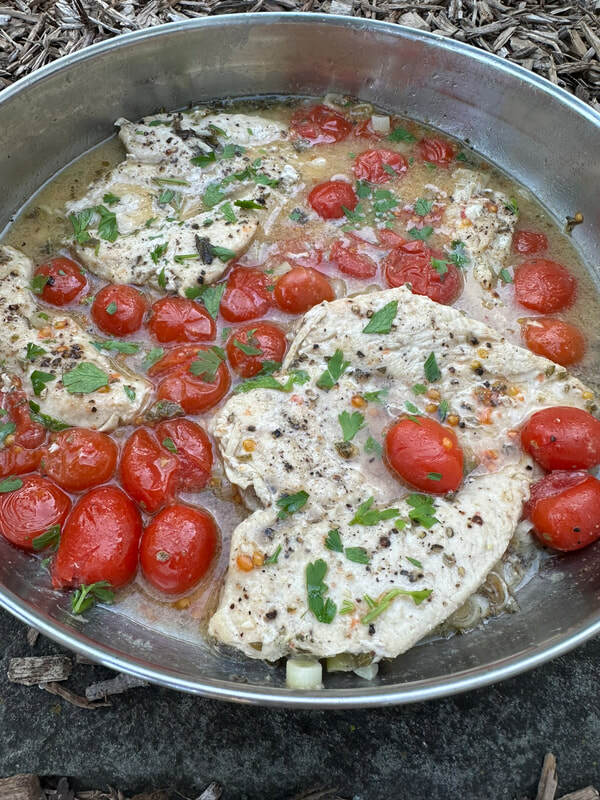
The recipe begins by cooking the boneless chicken in a 12-inch skillet with a bit of olive oil until it is browned. The scallions, that you thinly sliced, are put in the empty spaces between the chicken pieces, seasoned with salt and pepper and cooked until softened. The garlic, oregano, mustard and white wine are added and the chicken is turned over and over again mixing everything together, about one minute. The tomatoes are added seasoned with salt and mixed with the other ingredients. Occasionally, give the dish a stir and press the tomatoes with the back of a wooden spoon until all the tomatoes burst. Check for chicken doneness. To serve, garnish with one of green herbs that you chopped or tore into small pieces.
This was a great meal. There was a lovely complexity to the dish with the Dijon mustard adding some spiciness, the white wine acidity to balance out the Dijon and the tomatoes providing a sweetness to the sauce. I served the chicken on a bed of white rice to soak up all the flavorful juices. Also, instead of chicken thighs I used boneless chicken breasts adjusting the cooking time, used an instant read thermometer and parsley for garnish.
Tomato Basil Chicken Breasts is a 30-minute meal that busy families need to have in their cooking arsenal. For the recipe you’ll need boneless and skinless chicken, salt, pepper, unsalted butter, olive oil, shallots, tomatoes, capers in brine, red wine vinegar and basil leaves for garnishing.
The chicken is seasoned with salt and pepper then dredged in flour, coating it evenly. Both butter and olive oil go into a medium skillet where the chicken is cooked until golden brown on both sides and thoroughly cooked. The chicken is transferred to serving plates.
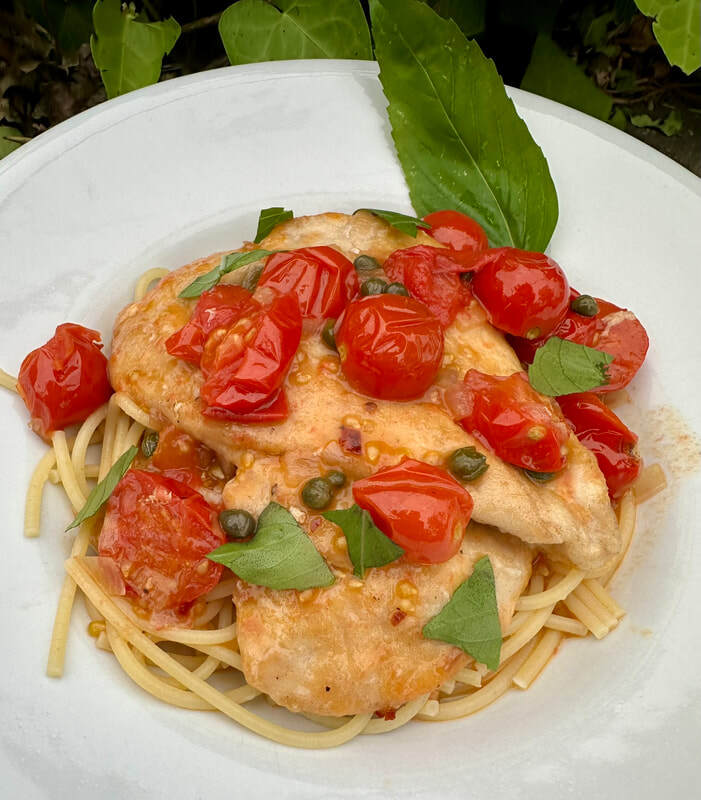
Into the pan goes diced shallots, which are cooked until softened and caramelized. The tomatoes and 1/3 cup of water go into the pan and is simmered until reduced by half. I used grape/cherry tomatoes, but you can use plum tomatoes (drier than regular tomatoes), but cut into small pieces. The capers are added to the pan along with a pat of butter and the red wine vinegar. The pan is removed from the heat and seasoning adjusted. Garnish the chicken with torn basil leaves and spoon the tomato sauce over the chicken; adjust pepper. When I made this dish, I cooked a small amount of spaghetti to serve as a base for the chicken.
What a delicious meal! The tomatoes released enough juice to coat the pasta, yet not overwhelm it. The sauce had a lovely acidity and tang from the vinegar and briny capers. The basil added another layer of flavor. Overall, a winner.
Recently I was watching the new season of “America’s Test Kitchen” on PBS.
Elle Simone was demonstrating Zha Paigu (Taiwanese Fried Pork Chops). These pork chops are fried twice. This gives the exterior of the pork chops a nice crunch. For the recipe you’ll need bone in pork chops, soy sauce, michiu (a fermented Chinese rice vinegar made with glutinous rice and spring water), sugar, water, Chinese five spice, salt, white pepper, minced garlic, eggs, coarse sweet potato starch and vegetable oil for frying. If you can’t find michiu you can use sake or clear rice wine vinegar, I used clear rice vinegar. Instead of sweet potato starch I substituted cornstarch
Using a meat pounder, the pork chops are pounded to a thickness of 1/4-inch. In a large bowl the soy sauce, michiu, garlic, sugar, water, five-spice powder, salt and white pepper get whisked together. The pork chops need to marinate in the mixture for at least an hour and up to 4.
To fry, the pork chops are dipped in an egg wash and dredged in the sweet potato starch. In a wok or Dutch oven, heat the oil to 350° and fry one chop at a time for one minute per side. Transfer to a cooling rack set over a rimmed sheet pan. Bring the oil back up to 350° and fry the next chop.
For the second fry, the oil temperature is increased to 375° for the second fry, again one minute per side. The pork chops should rest for five minutes before carving the meat from the bone into 1/2-inch slices.
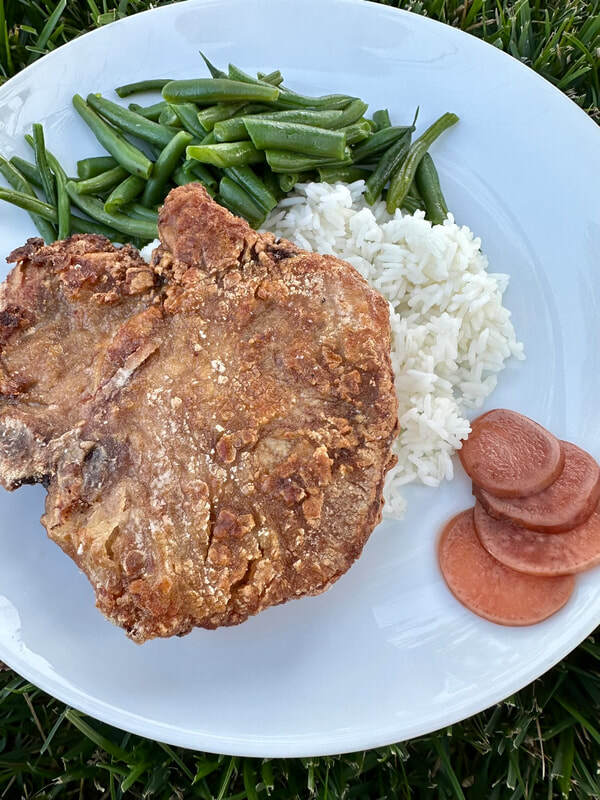
These pork chops were the bomb! They were so flavorsome from the marinade, being only 1/4-inch thick, they cooked fast but were tender and juicy with a delightful crispy exterior. Both my husband and I really enjoyed this dish.
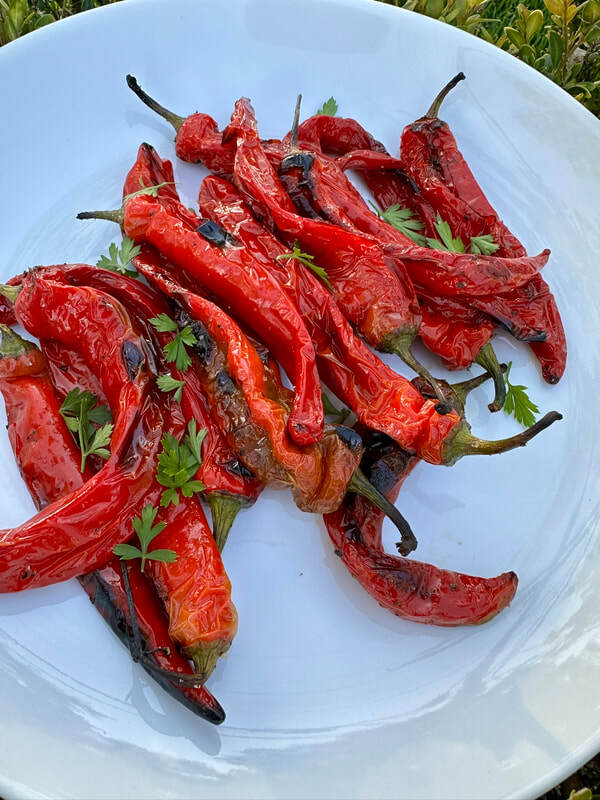
Mid-summer I started to see a few posts about Jimmy Nardello peppers. These peppers are an heirloom variety that are small and conical in shape. They’re best when they have turned red; when cooked become tender and soft with a mild fruity flavor. I recently found them at AsburyFresh Farmers Market at the Rolling Hills Farm stand. I grilled them as a side dish for dinner one night. I rinsed them off, tossed with a bit of olive oil, salt and pepper and placed them in a grill basket to roast. These were fantastic, full of flavor and slightly sweet. I’ll be looking for them again this weekend.
This was a great weeknight meal as it came together in about 40 minutes total. In order for this to be done in a timely fashion, I urge you to layout and measure all your ingredients ahead of time.
The recipe begins by cooking the boneless chicken in a 12-inch skillet with a bit of olive oil until it is browned. The scallions, that you thinly sliced, are put in the empty spaces between the chicken pieces, seasoned with salt and pepper and cooked until softened. The garlic, oregano, mustard and white wine are added and the chicken is turned over and over again mixing everything together, about one minute. The tomatoes are added seasoned with salt and mixed with the other ingredients. Occasionally, give the dish a stir and press the tomatoes with the back of a wooden spoon until all the tomatoes burst. Check for chicken doneness. To serve, garnish with one of green herbs that you chopped or tore into small pieces.
This was a great meal. There was a lovely complexity to the dish with the Dijon mustard adding some spiciness, the white wine acidity to balance out the Dijon and the tomatoes providing a sweetness to the sauce. I served the chicken on a bed of white rice to soak up all the flavorful juices. Also, instead of chicken thighs I used boneless chicken breasts adjusting the cooking time, used an instant read thermometer and parsley for garnish.
Tomato Basil Chicken Breasts is a 30-minute meal that busy families need to have in their cooking arsenal. For the recipe you’ll need boneless and skinless chicken, salt, pepper, unsalted butter, olive oil, shallots, tomatoes, capers in brine, red wine vinegar and basil leaves for garnishing.
The chicken is seasoned with salt and pepper then dredged in flour, coating it evenly. Both butter and olive oil go into a medium skillet where the chicken is cooked until golden brown on both sides and thoroughly cooked. The chicken is transferred to serving plates.
Into the pan goes diced shallots, which are cooked until softened and caramelized. The tomatoes and 1/3 cup of water go into the pan and is simmered until reduced by half. I used grape/cherry tomatoes, but you can use plum tomatoes (drier than regular tomatoes), but cut into small pieces. The capers are added to the pan along with a pat of butter and the red wine vinegar. The pan is removed from the heat and seasoning adjusted. Garnish the chicken with torn basil leaves and spoon the tomato sauce over the chicken; adjust pepper. When I made this dish, I cooked a small amount of spaghetti to serve as a base for the chicken.
What a delicious meal! The tomatoes released enough juice to coat the pasta, yet not overwhelm it. The sauce had a lovely acidity and tang from the vinegar and briny capers. The basil added another layer of flavor. Overall, a winner.
Recently I was watching the new season of “America’s Test Kitchen” on PBS.
Elle Simone was demonstrating Zha Paigu (Taiwanese Fried Pork Chops). These pork chops are fried twice. This gives the exterior of the pork chops a nice crunch. For the recipe you’ll need bone in pork chops, soy sauce, michiu (a fermented Chinese rice vinegar made with glutinous rice and spring water), sugar, water, Chinese five spice, salt, white pepper, minced garlic, eggs, coarse sweet potato starch and vegetable oil for frying. If you can’t find michiu you can use sake or clear rice wine vinegar, I used clear rice vinegar. Instead of sweet potato starch I substituted cornstarch
Using a meat pounder, the pork chops are pounded to a thickness of 1/4-inch. In a large bowl the soy sauce, michiu, garlic, sugar, water, five-spice powder, salt and white pepper get whisked together. The pork chops need to marinate in the mixture for at least an hour and up to 4.
To fry, the pork chops are dipped in an egg wash and dredged in the sweet potato starch. In a wok or Dutch oven, heat the oil to 350° and fry one chop at a time for one minute per side. Transfer to a cooling rack set over a rimmed sheet pan. Bring the oil back up to 350° and fry the next chop.
For the second fry, the oil temperature is increased to 375° for the second fry, again one minute per side. The pork chops should rest for five minutes before carving the meat from the bone into 1/2-inch slices.
These pork chops were the bomb! They were so flavorsome from the marinade, being only 1/4-inch thick, they cooked fast but were tender and juicy with a delightful crispy exterior. Both my husband and I really enjoyed this dish.
Mid-summer I started to see a few posts about Jimmy Nardello peppers. These peppers are an heirloom variety that are small and conical in shape. They’re best when they have turned red; when cooked become tender and soft with a mild fruity flavor. I recently found them at AsburyFresh Farmers Market at the Rolling Hills Farm stand. I grilled them as a side dish for dinner one night. I rinsed them off, tossed with a bit of olive oil, salt and pepper and placed them in a grill basket to roast. These were fantastic, full of flavor and slightly sweet. I’ll be looking for them again this weekend.
Dijon Chicken with Tomatoes and Scallions
By Yasmin Fahr
The New York Times/NYT Cooking
Total Time: 40 minutes
Prep Time: 10 minutes
Cook Time: 30 minutes
Yield: 4 servings
Ingredients
2 tablespoons olive oil
1½ pounds boneless, skinless chicken thighs, patted dry
Salt and fresh black pepper
4scallions, light green and white parts thinly sliced
3 garlic cloves, grated or minced
1 tablespoon dried oregano
1 tablespoon Dijon mustard
½ cup white wine
2 pints cherry or grape tomatoes
¼ packed cup cilantro, parsley or basil leaves and tender stems, gently torn or chopped
Preparation
By Yasmin Fahr
The New York Times/NYT Cooking
Total Time: 40 minutes
Prep Time: 10 minutes
Cook Time: 30 minutes
Yield: 4 servings
Ingredients
2 tablespoons olive oil
1½ pounds boneless, skinless chicken thighs, patted dry
Salt and fresh black pepper
4scallions, light green and white parts thinly sliced
3 garlic cloves, grated or minced
1 tablespoon dried oregano
1 tablespoon Dijon mustard
½ cup white wine
2 pints cherry or grape tomatoes
¼ packed cup cilantro, parsley or basil leaves and tender stems, gently torn or chopped
Preparation
- Heat the oil in a wide pot or deep 12-inch skillet over medium-high until it shimmers. Add the chicken in an even layer and season the top with salt and pepper. Cook, undisturbed, until the chicken is browned and easily releases from the pan, 7 to 9 minutes.
- Flip the chicken and add the scallions to the empty spaces in the pot. Season lightly with salt. Let cook until the scallions soften, about 2 minutes. Add the garlic, oregano, mustard and white wine, turning the chicken pieces over and back again to stir everything together, about 1 minute.
- Add the tomatoes and season with salt. Cook, stirring occasionally and gently pressing the tomatoes with the back of a wooden spoon, until the tomatoes burst and the chicken is cooked through, 10 to 12 minutes more. Add a few tablespoons of water if it looks dry at any point.
- Sprinkle with the cilantro and serve.
Tomato Basil Chicken Breasts
By Christian Reynoso
The New York Times/NYT Cooking
Total Time: 30 minutes
Prep Time: 10 minutes
Cook Time: 20 minutes
Yield: 2 servings
Ingredients
2 small boneless skinless chicken breasts (about ¾ pound) or 1 large chicken breast, halved horizontally
Salt and pepper
¼ cup all-purpose flour
3 tablespoons unsalted butter, divided
1tablespoon olive oil
2 tablespoons diced shallots (about 1 medium shallot)
12 ounces assorted tomatoes, small ones halved and medium and large cut in wedges
1 tablespoon capers in brine, drained
½ teaspoon red wine vinegar
Plenty of basil leaves (large leaves torn), for serving
Preparation
By Christian Reynoso
The New York Times/NYT Cooking
Total Time: 30 minutes
Prep Time: 10 minutes
Cook Time: 20 minutes
Yield: 2 servings
Ingredients
2 small boneless skinless chicken breasts (about ¾ pound) or 1 large chicken breast, halved horizontally
Salt and pepper
¼ cup all-purpose flour
3 tablespoons unsalted butter, divided
1tablespoon olive oil
2 tablespoons diced shallots (about 1 medium shallot)
12 ounces assorted tomatoes, small ones halved and medium and large cut in wedges
1 tablespoon capers in brine, drained
½ teaspoon red wine vinegar
Plenty of basil leaves (large leaves torn), for serving
Preparation
- Season the chicken breasts all over with salt and pepper. Add the flour to a shallow bowl or plate. Dredge the chicken by placing it in the flour, then turning to coat all sides evenly.
- Heat 2 tablespoons of butter and the olive oil in a medium skillet over medium. When the mixture is bubbling, shake off any excess flour from the chicken and add to the skillet. Cook, undisturbed, until golden brown, about 4 minutes. Flip the pieces over and continue cooking until cooked through, about 4 more. Transfer the chicken to two serving plates.
- Add the shallots to the pan and cook, stirring, until softened and lightly caramelized, about 2 minutes. Stir in the tomatoes and ⅓ cup water (this helps create more sauce and helps the tomatoes cook more quickly). Simmer until the sauce is reduced by about half, about 3 minutes.
- Stir in the capers, the remaining 1 tablespoon butter and the vinegar. Turn off the heat and season with salt.
- To serve, top the chicken with the basil leaves and the tomato sauce and season with black pepper.
Zha Paigu (Taiwanese Fried Pork Chops)
Recipe from “America’s Test Kitchen,” Episode 2517
Time: 1-1/4 hours, plus 1 hour marinating
Serves: 4
Ingredients
1 tablespoon soy sauce
1 tablespoon michiu
2 garlic cloves, minced to paste 1½ teaspoons sugar
1½ teaspoons water
¾ teaspoon five-spice powder
½ teaspoon table salt
¼ teaspoon white pepper
2 (8- to 10-ounce) bone-in pork rib chops, ¾ to 1 inch thick
2 large eggs
1 cup coarse sweet potato starch
3 cups vegetable oil for frying
Before You Begin: If rib chops are unavailable, blade chops may be used. The bones of the chops are great for nibbling, which is why we include them for serving. Coarse (or “thick”) sweet potato starch gives the chops their distinct crunch. You can substitute coarse tapioca starch. We developed this recipe with michiu, Taiwanese rice wine; if it's unavailable, clear rice wine and sake make good substitutes. Fry the chops in a 14-inch wok or a Dutch oven that holds 6 quarts or more. To make paigu fan, serve the chops with white rice; a stir-fried vegetable, such as napa cabbage; a pickled vegetable, such as mustard greens; and Lu Dan (Braised Eggs).
Directions
“Why This Works: For juicy, crispy zha paigu, we started with bone-in rib chops because they cook up tender and juicy. Pounding the chops ¼ inch thick ensured that they cooked quickly yet still offered plenty of meaty chew. We soaked the chops in a super flavorful marinade of soy sauce, michiu (Taiwanese rice wine), sugar, salt, white pepper, garlic, and sweetly aromatic five-spice powder. Dipping the marinated chops in beaten egg before dredging them in coarse (sometimes labeled “thick”) sweet potato starch created a substantial, shattery crust. Coarse sweet potato starch is a big part of the magic of the dish: It developed an exceptionally crispy, craggy crust, especially after the chops were double-fried, a technique that ensured that all the moisture had been expelled from the crust.”
Recipe from “America’s Test Kitchen,” Episode 2517
Time: 1-1/4 hours, plus 1 hour marinating
Serves: 4
Ingredients
1 tablespoon soy sauce
1 tablespoon michiu
2 garlic cloves, minced to paste 1½ teaspoons sugar
1½ teaspoons water
¾ teaspoon five-spice powder
½ teaspoon table salt
¼ teaspoon white pepper
2 (8- to 10-ounce) bone-in pork rib chops, ¾ to 1 inch thick
2 large eggs
1 cup coarse sweet potato starch
3 cups vegetable oil for frying
Before You Begin: If rib chops are unavailable, blade chops may be used. The bones of the chops are great for nibbling, which is why we include them for serving. Coarse (or “thick”) sweet potato starch gives the chops their distinct crunch. You can substitute coarse tapioca starch. We developed this recipe with michiu, Taiwanese rice wine; if it's unavailable, clear rice wine and sake make good substitutes. Fry the chops in a 14-inch wok or a Dutch oven that holds 6 quarts or more. To make paigu fan, serve the chops with white rice; a stir-fried vegetable, such as napa cabbage; a pickled vegetable, such as mustard greens; and Lu Dan (Braised Eggs).
Directions
- Whisk soy sauce, michiu, garlic, sugar, water, five-spice powder, salt, and white pepper together in large bowl.
- Place 1 chop on cutting board; cover with sheet of plastic wrap; and pound to ¼-inch thickness, being careful to avoid bone. Repeat with remaining chop. Add chops to bowl with marinade and toss to evenly coat. Cover and refrigerate for 1 hour or up to 4 hours.
- Beat eggs in shallow dish. Spread sweet potato starch in second shallow dish. Working with 1 chop at a time, remove from marinade (do not pat dry) and dip into egg, turning to coat well and allowing excess egg to drip back into dish. Coat evenly on all sides with sweet potato starch, pressing on chop to adhere. Transfer chops to rimmed baking sheet.
- Set wire rack in second rimmed baking sheet. Add oil to wok or large Dutch oven and heat over medium-high heat to 350 degrees. Place 1 chop in oil and cook until just starting to brown on both sides, 1 minute per side. Transfer chop to prepared rack. Return oil to 350 degrees and repeat with remaining chop.
- Heat oil to 375 degrees. Return 1 chop to oil and cook until golden brown on both sides, about 1 minute per side. Transfer chop to rack. Return oil to 375 degrees and repeat with remaining chop. Let chops rest for 5 minutes. Carve meat from bone and slice ½ inch thick. Serve meat with bones.
“Why This Works: For juicy, crispy zha paigu, we started with bone-in rib chops because they cook up tender and juicy. Pounding the chops ¼ inch thick ensured that they cooked quickly yet still offered plenty of meaty chew. We soaked the chops in a super flavorful marinade of soy sauce, michiu (Taiwanese rice wine), sugar, salt, white pepper, garlic, and sweetly aromatic five-spice powder. Dipping the marinated chops in beaten egg before dredging them in coarse (sometimes labeled “thick”) sweet potato starch created a substantial, shattery crust. Coarse sweet potato starch is a big part of the magic of the dish: It developed an exceptionally crispy, craggy crust, especially after the chops were double-fried, a technique that ensured that all the moisture had been expelled from the crust.”