 Donna Walsifer
hot and steamy
The weather so far this summer can be summed up as hot and steamy. What this weather does do is inspire me to find recipes that are either no cook, stove top cooked or can be grilled.
If you have not discovered them yet, you must find your way to Jersey Artisan Company whose retail store is located in East Hanover, NJ. Owned by Salvatore Pisani, he creates cheeses and dairy products using milk from Spring Run Dairy Farm and sour dough breads with grains from River Valley Community Grains. The assorted variety of cheeses are created in Whippany, NJ. If you can’t make your way to East Hanover this summer, you can find Sal and his products at farmers markets in Jersey City, Weehawken, Monroe Township, Parsippany, Sparta, West Windsor, Scotch Plains, Blairstown, Summit and Asbury Park. The hyperlink will direct to the specific markets for days, times and which months the markets operate. Although Sal brings a variety of cheese and baked goods to the AsburyFresh market, so far I’ve only tried his semolina and ciabatta breads, fresh burrata and mozzarella.
If you have not discovered them yet, you must find your way to Jersey Artisan Company whose retail store is located in East Hanover, NJ. Owned by Salvatore Pisani, he creates cheeses and dairy products using milk from Spring Run Dairy Farm and sour dough breads with grains from River Valley Community Grains. The assorted variety of cheeses are created in Whippany, NJ. If you can’t make your way to East Hanover this summer, you can find Sal and his products at farmers markets in Jersey City, Weehawken, Monroe Township, Parsippany, Sparta, West Windsor, Scotch Plains, Blairstown, Summit and Asbury Park. The hyperlink will direct to the specific markets for days, times and which months the markets operate. Although Sal brings a variety of cheese and baked goods to the AsburyFresh market, so far I’ve only tried his semolina and ciabatta breads, fresh burrata and mozzarella.
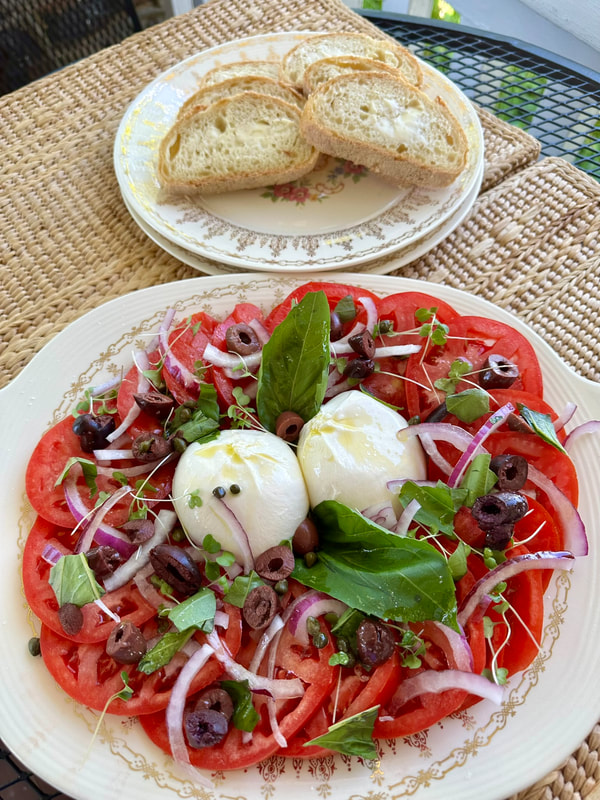
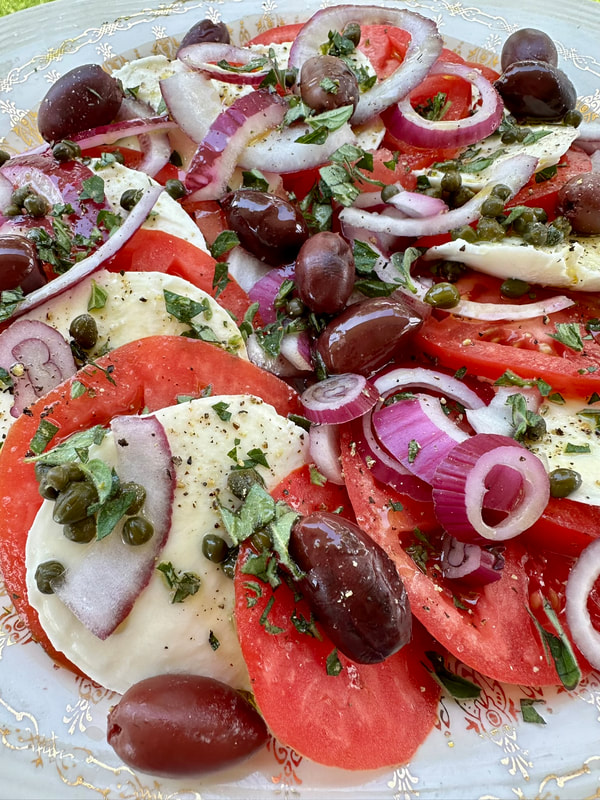
My husband sent me an image recently of a caprese salad with sliced cucumbers, sliced red onions, capers, Kalamata olives, what appears to be feta cheese and dried oregano. For my first take on this salad, I substituted fresh burrata and fresh chopped oregano. It was the first time I used burrata this way and it was out of this world. Jersey Artisan’s burrata has the richest, creamiest center I’ve ever had. The fresh oregano offered was robust with an aromatic flavor of earthiness and minty undertones. The second time I used Jersey Artisan’s fresh mozzarella and swapped the fresh oregano for fresh basil. The basil was a much better complement to the cheese with its sweet and slightly peppery undertones. What I found was the Kalamata olives I used were a bit too salty for my taste. I have a jar of Leccino olives that have mild and fruity flavors with a hint of bitterness which may taste better in this caprese.
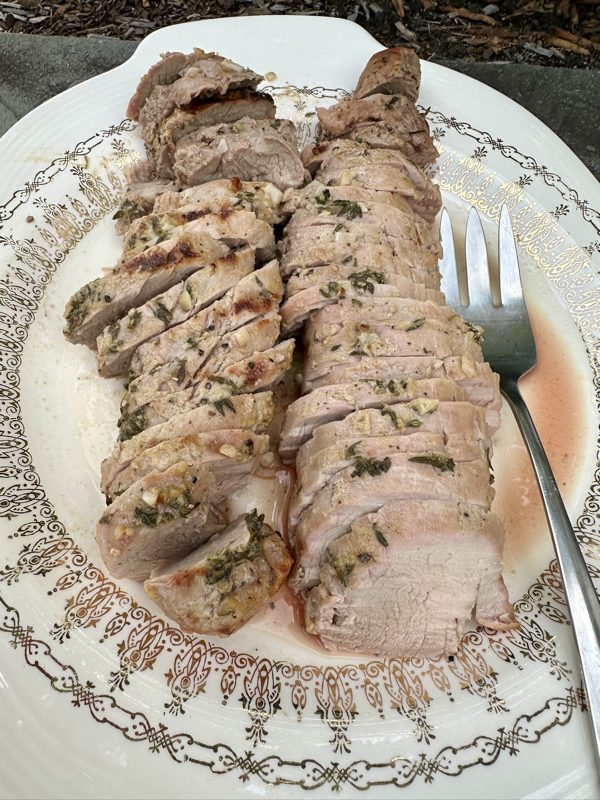
Over the Fourth of July holiday my daughter and her family joined us for several days. Pleasing the taste of children and adults is a true balancing act. I decided to prepare pork tenderloins using a recipe by Lidey Heuck which appeared on The New York Times/NYT Cooking website. Other than the pork you’ll need extra-virgin olive oil, minced garlic, fresh (or dried) thyme leaves, honey, Dijon mustard, kosher salt and black pepper.
A marinade is made with the oil, garlic, thyme, honey, mustard, salt and pepper. The mixture is spread over the pork and sits covered in the refrigerator for a minimum of 3 hours and a maximum of 24.
To cook, the tenderloins are seared in a large skillet coated with olive oil and browned on all sides. Once the meat is browned, it’s transferred to an oven to bake until the internal temperature reaches 140°. As it’s been so hot out, I decided to use my outdoor grill as the oven. Thinking ahead I used a cast-iron skillet for the browning process. I placed two bricks on the grates and placed the skillet on top, turning off the center burner. The pork cooks to the designated temperature and was removed to rest before cutting. In a separate cast-iron skillet, I seared some fresh peaches to accompany the pork.
What a delightful summertime meal! The complexity of flavors from the marinade really infused a wonderful flavor into a cut of meat that is very lean slightly bland tasting. The accompanying peaches added a lovely sweet contrast to the savoriness of the pork. Overall, everyone enjoyed the meal.
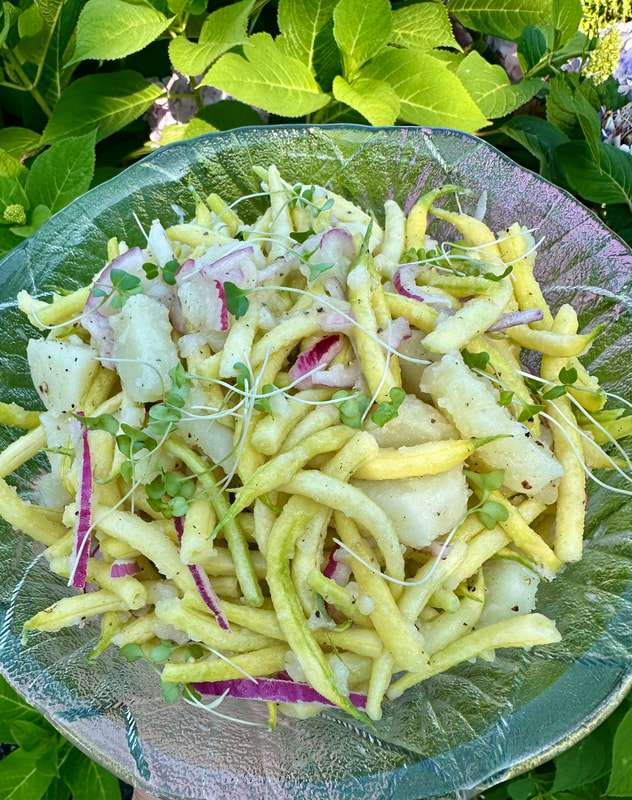
It’s the summer time and I know my husband would prefer a cold meal (after I cooked it over a hot stove) for supper. In our recent CSA box, we had a good amount of yellow string beans. I found a recipe on Lidia’s Italy website for String Bean and Potato Salad. Along with one pound of trimmed string beans you’ll need two medium to large Idaho potatoes, 3 tablespoons olive oil, 3 tablespoons white wine vinegar, 1/4 teaspoon salt, freshly ground black pepper to taste and one small red onion thinly sliced.
The potatoes are scrubbed and boiled in salted water until tender which should take approximately 20 minutes. During the last seven minutes, string beans are added and cook until both the beans and potatoes are tender. When done, drain and run the beans under cold water.
When cool to the touch, the potatoes are peeled and sliced 1/3-inch thick with the beans into bite-size lengths. Using a large bowl, big enough for the potatoes and string beans, whisk the oil, vinegar, salt and pepper. Add the vegetables and gently toss together, trying not to break the potatoes.
This was wonderful summer side dish. As I blanched the string beans ahead of selecting this recipe, mine were crisp tender with a light crunch. This crunch played off well against the tender potatoes and the simple oil and vinegar dressing was light an refreshing for a hot summer supper. Note, that it calls for white wine vinegar, not white vinegar. White wine vinegar is produced by fermenting white wine, converting the alcohol into acetic acid making it tart with fruity notes giving it a clean, refreshing finish.
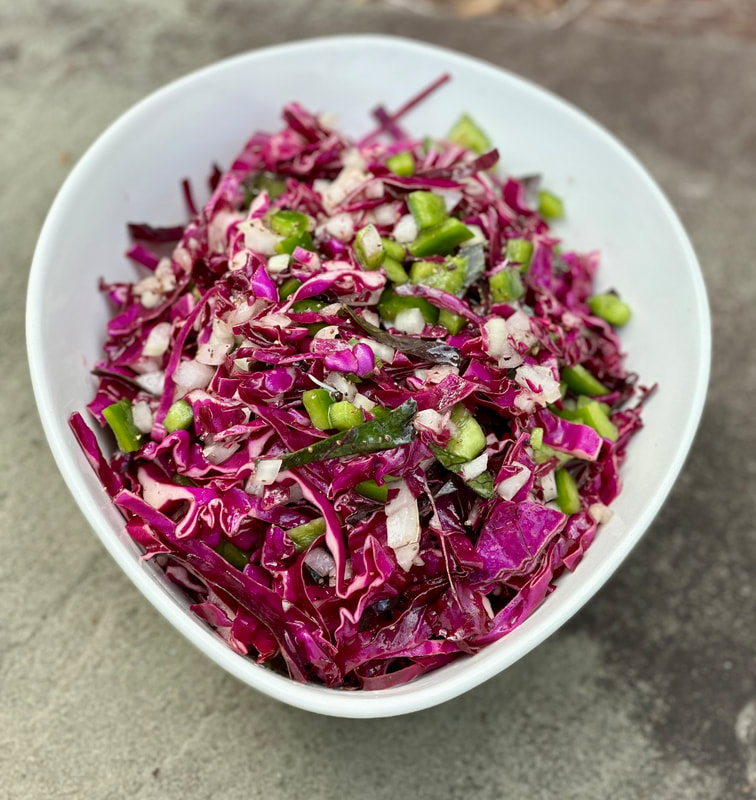
Also in the same box was a head of red cabbage. I decided I would like to make a sweet and sour red coleslaw, but I couldn’t find a recipe on the internet. Lo and behold, in an old Jean Anderson cookbook, “The Grass Roots Cookbook,” was the type of recipe I was after, German Coleslaw. Beside the red cabbage I needed, a green pepper and a yellow onion. The dressing consists of granulated sugar, hot water, apple cider vinegar, celery seed, salt, pepper and vegetable oil.
The red cabbage is finely shredded, the pepper is minced and the onion is finely chopped; then placed in a bowl large enough for tossing. In a separate bowl, the hot water is mixed with the sugar until dissolved followed by the addition of apple cider vinegar, celery seeds, salt and pepper. The liquid is poured over the cabbage and tossed and then the oil is drizzled over the cabbage and tossed again. The coleslaw needs to marinate for a minimum of two to three hours before serving. I loved this preparation; it was light and refreshing. On the other hand,….my husband likes a creamy coleslaw, however, he did like this preparation.
It’s been a while since I made homemade pizza on the grill. So to use up some of newly received CSA green zucchini and Lioni Mozzarella, I did a riff on a pizza showcased on Catbird Asbury Park’s recent week night menu, Summer White Pie which was sweet corn and zucchini with lemon ricotta, mozzarella, topped with prosciutto and a drizzle of balsamic glaze. Using my own homemade pizza dough I made lemon ricotta from a recipe found on the website “Food Banjo.” The ingredients for the lemon ricotta include extra virgin olive oil, honey, lemon juice and salt.
The oil, honey and lemon juice are whisked together. A pinch of salt is added and more whisking until smooth (you can you a stand or hand mixer, but I was lazy).
For the zucchini, I sliced it an 1/8-inch thick using my mandoline and laid the slices on a cotton dish cloth and lightly sprinkled with salt to draw out the extra moisture. I sliced the corn off the cob and set that aside.
When it was time to prepare the pizza, I stretched the dough into a 10-12” diameter. Next, I spread on the lemon ricotta on the dough and added thin slices of mozzarella followed by the zucchini and corn kernels. To finish the pie, I drizzled on DeNigris white balsamic glaze. While Catbird’s pie include thin slices of prosciutto, I forgot to purchase when I went to my local food store. However, the pizza was scrumptious. The combination of flavors were well balanced with the fresh corn kernels giving a little bit to the pizza. The balsamic glaze seemed to bring all the flavors together. I can see why prosciutto would be good as it would give the pizza a savoriness from the its slightly salty flavor. However, while missed, this was truly a summertime pizza pie.
Over the Fourth of July holiday my daughter and her family joined us for several days. Pleasing the taste of children and adults is a true balancing act. I decided to prepare pork tenderloins using a recipe by Lidey Heuck which appeared on The New York Times/NYT Cooking website. Other than the pork you’ll need extra-virgin olive oil, minced garlic, fresh (or dried) thyme leaves, honey, Dijon mustard, kosher salt and black pepper.
A marinade is made with the oil, garlic, thyme, honey, mustard, salt and pepper. The mixture is spread over the pork and sits covered in the refrigerator for a minimum of 3 hours and a maximum of 24.
To cook, the tenderloins are seared in a large skillet coated with olive oil and browned on all sides. Once the meat is browned, it’s transferred to an oven to bake until the internal temperature reaches 140°. As it’s been so hot out, I decided to use my outdoor grill as the oven. Thinking ahead I used a cast-iron skillet for the browning process. I placed two bricks on the grates and placed the skillet on top, turning off the center burner. The pork cooks to the designated temperature and was removed to rest before cutting. In a separate cast-iron skillet, I seared some fresh peaches to accompany the pork.
What a delightful summertime meal! The complexity of flavors from the marinade really infused a wonderful flavor into a cut of meat that is very lean slightly bland tasting. The accompanying peaches added a lovely sweet contrast to the savoriness of the pork. Overall, everyone enjoyed the meal.
It’s the summer time and I know my husband would prefer a cold meal (after I cooked it over a hot stove) for supper. In our recent CSA box, we had a good amount of yellow string beans. I found a recipe on Lidia’s Italy website for String Bean and Potato Salad. Along with one pound of trimmed string beans you’ll need two medium to large Idaho potatoes, 3 tablespoons olive oil, 3 tablespoons white wine vinegar, 1/4 teaspoon salt, freshly ground black pepper to taste and one small red onion thinly sliced.
The potatoes are scrubbed and boiled in salted water until tender which should take approximately 20 minutes. During the last seven minutes, string beans are added and cook until both the beans and potatoes are tender. When done, drain and run the beans under cold water.
When cool to the touch, the potatoes are peeled and sliced 1/3-inch thick with the beans into bite-size lengths. Using a large bowl, big enough for the potatoes and string beans, whisk the oil, vinegar, salt and pepper. Add the vegetables and gently toss together, trying not to break the potatoes.
This was wonderful summer side dish. As I blanched the string beans ahead of selecting this recipe, mine were crisp tender with a light crunch. This crunch played off well against the tender potatoes and the simple oil and vinegar dressing was light an refreshing for a hot summer supper. Note, that it calls for white wine vinegar, not white vinegar. White wine vinegar is produced by fermenting white wine, converting the alcohol into acetic acid making it tart with fruity notes giving it a clean, refreshing finish.
Also in the same box was a head of red cabbage. I decided I would like to make a sweet and sour red coleslaw, but I couldn’t find a recipe on the internet. Lo and behold, in an old Jean Anderson cookbook, “The Grass Roots Cookbook,” was the type of recipe I was after, German Coleslaw. Beside the red cabbage I needed, a green pepper and a yellow onion. The dressing consists of granulated sugar, hot water, apple cider vinegar, celery seed, salt, pepper and vegetable oil.
The red cabbage is finely shredded, the pepper is minced and the onion is finely chopped; then placed in a bowl large enough for tossing. In a separate bowl, the hot water is mixed with the sugar until dissolved followed by the addition of apple cider vinegar, celery seeds, salt and pepper. The liquid is poured over the cabbage and tossed and then the oil is drizzled over the cabbage and tossed again. The coleslaw needs to marinate for a minimum of two to three hours before serving. I loved this preparation; it was light and refreshing. On the other hand,….my husband likes a creamy coleslaw, however, he did like this preparation.
It’s been a while since I made homemade pizza on the grill. So to use up some of newly received CSA green zucchini and Lioni Mozzarella, I did a riff on a pizza showcased on Catbird Asbury Park’s recent week night menu, Summer White Pie which was sweet corn and zucchini with lemon ricotta, mozzarella, topped with prosciutto and a drizzle of balsamic glaze. Using my own homemade pizza dough I made lemon ricotta from a recipe found on the website “Food Banjo.” The ingredients for the lemon ricotta include extra virgin olive oil, honey, lemon juice and salt.
The oil, honey and lemon juice are whisked together. A pinch of salt is added and more whisking until smooth (you can you a stand or hand mixer, but I was lazy).
For the zucchini, I sliced it an 1/8-inch thick using my mandoline and laid the slices on a cotton dish cloth and lightly sprinkled with salt to draw out the extra moisture. I sliced the corn off the cob and set that aside.
When it was time to prepare the pizza, I stretched the dough into a 10-12” diameter. Next, I spread on the lemon ricotta on the dough and added thin slices of mozzarella followed by the zucchini and corn kernels. To finish the pie, I drizzled on DeNigris white balsamic glaze. While Catbird’s pie include thin slices of prosciutto, I forgot to purchase when I went to my local food store. However, the pizza was scrumptious. The combination of flavors were well balanced with the fresh corn kernels giving a little bit to the pizza. The balsamic glaze seemed to bring all the flavors together. I can see why prosciutto would be good as it would give the pizza a savoriness from the its slightly salty flavor. However, while missed, this was truly a summertime pizza pie.
Pork Tenderloin
By Lidey Heuck
The New York Times/NYT Cooking
Published October 5, 2023
Total Time: 3 hours 40 minutes
Prep Time: 5 minutes
Cook Time; 25 minutes, plus marinating and resting
Yield: 4 to 6 servings
Ingredients
2 pork tenderloins, 1 to 1¼ pounds each
½cup extra-virgin olive oil, plus more as needed
2 tablespoons minced garlic (4 large cloves)
1 tablespoon chopped fresh thyme leaves (or 1½ teaspoons dried)
1 tablespoon honey
1tablespoon Dijon mustard
2 teaspoon kosher salt, plus more to taste
1 teaspoon black pepper, plus more to taste
Preparation
By Lidey Heuck
The New York Times/NYT Cooking
Published October 5, 2023
Total Time: 3 hours 40 minutes
Prep Time: 5 minutes
Cook Time; 25 minutes, plus marinating and resting
Yield: 4 to 6 servings
Ingredients
2 pork tenderloins, 1 to 1¼ pounds each
½cup extra-virgin olive oil, plus more as needed
2 tablespoons minced garlic (4 large cloves)
1 tablespoon chopped fresh thyme leaves (or 1½ teaspoons dried)
1 tablespoon honey
1tablespoon Dijon mustard
2 teaspoon kosher salt, plus more to taste
1 teaspoon black pepper, plus more to taste
Preparation
- Pat the tenderloins dry with paper towels and place them on a rimmed baking sheet or platter. In a small bowl, whisk together 6 tablespoons olive oil, garlic, thyme, honey, mustard, salt and pepper. Spread the mixture all over the pork, turning to coat, Refrigerate, covered, for at least 3 hours and up to 24 hours.
- Heat the oven to 375 degrees and remove the pork from the fridge while the oven comes to temperature. In a large (12-inch) skillet, heat the remaining 2 tablespoons of olive oil over medium-high heat. When the oil is hot, carefully lay one of the pork tenderloins in the pan and cook on both sides until nicely browned, 6 to 10 minutes total.
- Transfer to a large baking dish and repeat with the second tenderloin, adding more oil if the pan looks dry. Bake until an instant-read thermometer inserted into the thickest part of the tenderloins reaches 140 degrees, 18 to 22 minutes. Let rest for 10 minutes. (The temperature will rise to 145 degrees as the pork rests.)
- After resting, spoon the pan juices over the tenderloins and cut the pork into thin slices. (The center pieces will be pale pink and the end slices will be more well-done.) Sprinkle lightly with salt and pepper and serve.
String Bean and Potato Salad
Insalata di Fagiolini e Patate
By Lidia Bastianich
From “Lidia’s Italy” website
“Think of the above recipe as a master recipe. You can use other types of potato in place of the Idaho or Yukon Gold and a host of other ‘add-in’ vegetables in place of the string beans. There isn’t much to be said about this dish, except that we ate a lot of potatoes during my Istrian years and worked out many ways of dressing them up. This was one of my favorites when my grandmother’s earliest string beans were harvested. Try it as a picnic fare.”
Ingredients
2 medium-to-large Idaho potatoes
1-pound fresh string beans, trimmed
3 tablespoons olive oil
3 tablespoons white wine vinegar
¼ teaspoon salt
Freshly ground pepper to taste
1 small red onion, thinly sliced
Preparation
Boil the potatoes in 2 quarts of salted water for 20 minutes.
Add the beans and boil 7 minutes longer, until the beans and potatoes are just tender.
Strain into a colander, remove and set aside the potatoes. Refresh the beans under cold running water and drain well.
When the potatoes are cool enough to handle, peel and slice them 1/3” thick. If the beans are long, halve them crosswise.
In a large bowl, whisk together the oil, vinegar, salt and pepper.
Add the onion, potatoes, and beans, and toss very gently to dress all ingredients without breaking the potatoes.
Insalata di Fagiolini e Patate
By Lidia Bastianich
From “Lidia’s Italy” website
“Think of the above recipe as a master recipe. You can use other types of potato in place of the Idaho or Yukon Gold and a host of other ‘add-in’ vegetables in place of the string beans. There isn’t much to be said about this dish, except that we ate a lot of potatoes during my Istrian years and worked out many ways of dressing them up. This was one of my favorites when my grandmother’s earliest string beans were harvested. Try it as a picnic fare.”
Ingredients
2 medium-to-large Idaho potatoes
1-pound fresh string beans, trimmed
3 tablespoons olive oil
3 tablespoons white wine vinegar
¼ teaspoon salt
Freshly ground pepper to taste
1 small red onion, thinly sliced
Preparation
Boil the potatoes in 2 quarts of salted water for 20 minutes.
Add the beans and boil 7 minutes longer, until the beans and potatoes are just tender.
Strain into a colander, remove and set aside the potatoes. Refresh the beans under cold running water and drain well.
When the potatoes are cool enough to handle, peel and slice them 1/3” thick. If the beans are long, halve them crosswise.
In a large bowl, whisk together the oil, vinegar, salt and pepper.
Add the onion, potatoes, and beans, and toss very gently to dress all ingredients without breaking the potatoes.
German Coleslaw
Recipe of Mrs. Russell Harris of McLean County Illinois
“The Grass Roots Cookbook,” by Jean Anderson
Times Books
a Div. Of Quadrangle/The New York Times Book Co., Inc.
©1977, 1976, 1975, 1974
Servings: 6 to 8
“You’ll not go wrong in making the German sweet-sour dishes,” says Mrs. Harris, “if you use equal parts sugar, water and vinegar.” It’s a lesson she learned from her mother and one she uses today whether she is pickling beets or making coleslaw, lettuce or potato salad.”
Ingredients
8 cups moderately, finely shredded cabbage
1/2 medium-sized sweet green pepper, cored, seeded and minced
1 medium-sized yellow onion, peeled and chopped fine
Dressing
3 tablespoons sugar
3 tablespoons hot water
3 tablespoons cider vinegar
1/2 teaspoon celery seed
1/2 teaspoon salt
Pinch of pepper
1/4 cup vegetable oil
Preparation
Place cabbage, green pepper and onion in a large bowl and toss well to mix.
For the dressing: combine sugar and hot water, stirring until sugar dissolves; stir in vinegar, celery seed, salt and pepper. Pour vinegar mixture over slaw and toss well; drizzle in oil and toss well again.
Cover slaw and let marinate in the refrigerator 2 to 3 hours before serving. Toss well again before dishing up.
Recipe of Mrs. Russell Harris of McLean County Illinois
“The Grass Roots Cookbook,” by Jean Anderson
Times Books
a Div. Of Quadrangle/The New York Times Book Co., Inc.
©1977, 1976, 1975, 1974
Servings: 6 to 8
“You’ll not go wrong in making the German sweet-sour dishes,” says Mrs. Harris, “if you use equal parts sugar, water and vinegar.” It’s a lesson she learned from her mother and one she uses today whether she is pickling beets or making coleslaw, lettuce or potato salad.”
Ingredients
8 cups moderately, finely shredded cabbage
1/2 medium-sized sweet green pepper, cored, seeded and minced
1 medium-sized yellow onion, peeled and chopped fine
Dressing
3 tablespoons sugar
3 tablespoons hot water
3 tablespoons cider vinegar
1/2 teaspoon celery seed
1/2 teaspoon salt
Pinch of pepper
1/4 cup vegetable oil
Preparation
Place cabbage, green pepper and onion in a large bowl and toss well to mix.
For the dressing: combine sugar and hot water, stirring until sugar dissolves; stir in vinegar, celery seed, salt and pepper. Pour vinegar mixture over slaw and toss well; drizzle in oil and toss well again.
Cover slaw and let marinate in the refrigerator 2 to 3 hours before serving. Toss well again before dishing up.