 Donna Walsifer
toasted pecan scones
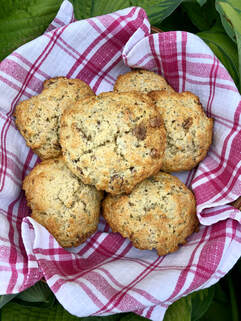
I was going through my recipe box the other day, reviewing recipes that I clipped over the years. I found some old cookie recipes from my late mother-in-law’s Aunt Betty Lee for oatmeal cookies using margarine and minute oatmeal (Just how old is this recipe?) A walnut cake that my mother used to make, a recipe from Good Housekeeping Magazine for Crispy Cookie Coffee Cakes and a Toasted Praline Scone recipe to name a few.
I don’t know how long I’ve had the scone recipe, perhaps over thirty years; it was time to try it out. The recipe called for shortening or butter flavored shortening. I used unsalted butter in the recipe. You’ll also need pecans, sugar, flour, baking powder, baking soda, white vinegar, eggs and milk. The vinegar seemed like an odd ingredient to me, however, when I did a little research I discovered that it is used to react with the baking soda to start the chemical reaction of carbon dioxide which helps the batter rise during baking.
I don’t know how long I’ve had the scone recipe, perhaps over thirty years; it was time to try it out. The recipe called for shortening or butter flavored shortening. I used unsalted butter in the recipe. You’ll also need pecans, sugar, flour, baking powder, baking soda, white vinegar, eggs and milk. The vinegar seemed like an odd ingredient to me, however, when I did a little research I discovered that it is used to react with the baking soda to start the chemical reaction of carbon dioxide which helps the batter rise during baking.
Instead of using a pastry blender to cut the butter into the dry ingredients, I used my food processor and the pulsing button. I added the wet ingredients and a few more pulses to bring the dough together. Once that was done, I used a half cup measuring cup to have uniform scones. A brush of milk and a sprinkling of turbinado sugar and the scones were off to the oven. Fifteen minutes and golden brown, the scones were done in about 30 minutes from start to finish. The fifteen minutes of prep includes making the praline pecans, which are mixed into the batter.
The scones came out great! They were light, had good height from the addition of white vinegar and had just enough sweetness. Traditional British scones are slightly sweet with a flavor profile more like an American biscuit. For my personal taste, if a scone is too sweet, it’s more like a dessert cake.
This is a nice quick recipe that is great to make for the family on the weekend or when you have overnight guests and you to want impress them at breakfast. Enjoy!
Toasted Praline Scones
Source: unknown
Yield: 6 large scones
3 ounces pecans (about 1 cup) coarsely chopped
3 tablespoons sugar (for coating pecans)
¼ cup sugar
2 cups flour
2 teaspoons baking powder
1 teaspoon salt
½ teaspoon baking soda
1/3 cup shortening or butter (I used unsalted butter)
1 tablespoon white vinegar
2 large eggs
1/3 cup milk
The scones came out great! They were light, had good height from the addition of white vinegar and had just enough sweetness. Traditional British scones are slightly sweet with a flavor profile more like an American biscuit. For my personal taste, if a scone is too sweet, it’s more like a dessert cake.
This is a nice quick recipe that is great to make for the family on the weekend or when you have overnight guests and you to want impress them at breakfast. Enjoy!
Toasted Praline Scones
Source: unknown
Yield: 6 large scones
3 ounces pecans (about 1 cup) coarsely chopped
3 tablespoons sugar (for coating pecans)
¼ cup sugar
2 cups flour
2 teaspoons baking powder
1 teaspoon salt
½ teaspoon baking soda
1/3 cup shortening or butter (I used unsalted butter)
1 tablespoon white vinegar
2 large eggs
1/3 cup milk
- Preheat oven to 400°. In 10”skillet over medium heat, cook pecans shaking pan frequently, until lightly toasted. Sprinkle 3 tablespoons sugar over pecans in skillet and cook, stirring until sugar melts and coats pecans well. Remove from pan.
- In large bowl, mix flour, baking powder, salt, baking soda and ¼ cup sugar. With pastry blender cut shortening or butter into flour mixture in bowl. I used a food processor for this step.
- In a small bowl with fork, mix vinegar, eggs and 1/3 cup milk until well blended. Stir milk mixture into flour mixture until well blended.
- Put dough on floured surface and need 15 times. With the food processor, I eliminated this step.
- Scoop dough by scant ½ cup onto ungreased cookie sheet. Brush tops with 1 tablespoon milk, spring with 1 teaspoon of sugar. Bake 15 minutes or until scones are golden brown.