 Donna Walsifer
who would have thought...
Sometimes our CSA repeats vegetables during the season. So, the question becomes, “What can I do with…” Another head of cabbage and more peaches were in my box last week.
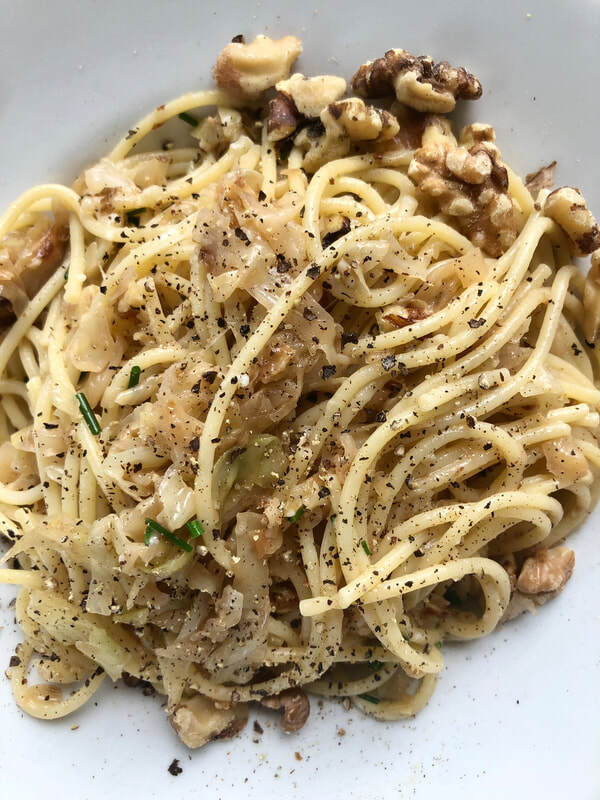
I went to my favorite source for recipes, The New York Times’ webpage called “Cooking.” As I mentioned before, there are a number of contributors and there’s a wide range of diverse backgrounds among the recipe developers. I would have never thought of putting caramelized cabbage with pasta, but Hetty Lui McKinnon did in her recipe for Caramelized Cabbage and Walnut Pasta.
My husband was a bit hesitant when I told him what was for supper, but he loves pasta and has enjoyed the many preparations I have made over the years. For the Caramelized Cabbage and Walnut Pasta, you’ll need olive oil, unsalted butter, cumin seeds, leeks, garlic cloves, green cabbage, Diamond Crystal salt, spaghetti or other long pasta, grated pecorino cheese, freshly ground black pepper, lemon juice, toasted walnuts and chopped chives (optional).
I went to my favorite source for recipes, The New York Times’ webpage called “Cooking.” As I mentioned before, there are a number of contributors and there’s a wide range of diverse backgrounds among the recipe developers. I would have never thought of putting caramelized cabbage with pasta, but Hetty Lui McKinnon did in her recipe for Caramelized Cabbage and Walnut Pasta.
My husband was a bit hesitant when I told him what was for supper, but he loves pasta and has enjoyed the many preparations I have made over the years. For the Caramelized Cabbage and Walnut Pasta, you’ll need olive oil, unsalted butter, cumin seeds, leeks, garlic cloves, green cabbage, Diamond Crystal salt, spaghetti or other long pasta, grated pecorino cheese, freshly ground black pepper, lemon juice, toasted walnuts and chopped chives (optional).
In reading some of the comments from other cooks, I took one’s advice and sliced my cabbage using a mandoline on the 1/4” setting. Using a Dutch oven, or a LeCreuset braiser as I did, add butter and olive oil to the pan. When the butter has melted, add the cumin seeds to bloom then sauté the leeks, garlic and cabbage with salt until wilted. As I wanted to get good color on my cabbage, I briefly covered it to soften, then removed the lid and stirred every so often until the cabbage was golden brown. The cabbage becomes sweet and tender.
In the meantime, you can start your pasta water and cook per the package instructions. Just before the pasta is done, remove one cup of pasta water. I used a large spider strainer and transferred the pasta to the cabbage pan. You’ll add the pecorino and black pepper and toss. I added the pasta water in increments until it was the consistency I liked. Lemon juice is added for brightness, walnuts for texture and chopped chives for color and a hint of onion and garlic.
What a surprisingly wonderful dish! My husband couldn’t get over how delicious the combination of ingredients were. It made quite a bit of pasta for just two people as the recipe called for a pound of pasta and two pounds of sliced cabbage. The leftovers were enjoyed again and made for a quick supper the other evening.
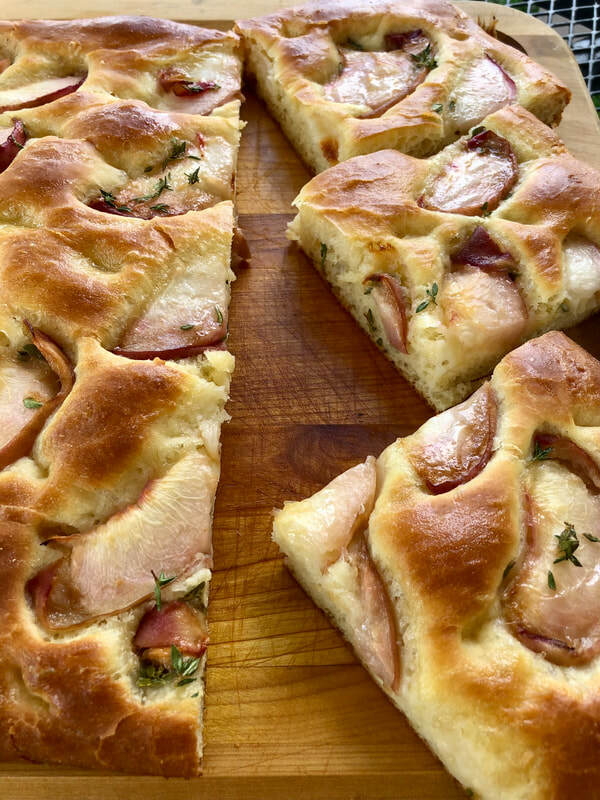
I do love my carbs, bread be it warm slathered with butter or lightly toasted, smeared with Duke’s Mayonnaise and sliced Jersey tomatoes makes the perfect summer lunch. Many years ago, I made a focaccia as an appetizer for company, but I never thought of making Peach Focaccia with Thyme as Samantha Seneviratne did.
The recipe for Peach Focaccia with Thyme popped up one morning in my NYT Cooking app. When more peaches appeared in my CSA share, I thought it would be interesting to make. The focaccia recipe is sweet compared to regular focaccia and the dough sticky.
For the recipe you’ll need warm water, one package of active dry yeast (2-1/4 teaspoons), granulated sugar, unsalted butter, bread flour, kosher salt, an egg, 2 peaches (12 ounces) or other stone fruit that has been halved, pitted and sliced into 1/4-inch thickness, fresh thyme.
I had some bread flour, but not the 3-3/4 cups needed for the recipe, so for the balance I used all-purpose flour.
The recipe begins by proofing the yeast in the bowl of a stand mixer with warm water and 1 tablespoon of sugar. The yeast will proof without the sugar just by using a ¼ cup of the flour from the recipe. You’ll also need to melt 1/4 cup of butter and cool.
Once the yeast has bloomed, add the flour, salt, an egg, 3 tablespoons of sugar and butter. Mix the dough until smooth and elastic, which should take approximately 5 minutes. Scrape down the sides and cover with plastic wrap (I used a dinner plate) and place in a warm, draft free location until double in size. This can take anywhere from 30 minutes to 2 hours. Gently punch the dough down, scrape the sides, recover and let it rise again.
During the second rise, prepare the sliced peaches by placing them in a bowl tossed with 2 tablespoons of sugar. Another 2 tablespoons of butter are melted then spread evenly in a rimmed baking pan. After the second rise, carefully tip the dough from the bowl and gently stretch into the sides and corners of the pan. I lightly floured my fingertips to move the dough. We’re not done yet, the dough has to rise again, uncovered in the same warm spot, until the dough rises 1/4-inch above the edge of the pan.
When done, gently dimple the surface of the dough, top with peach slices (do not add any of the peach juice) and sprigs of thyme. The focaccia is baked in a 400° oven for approximately 20-25 minutes or until golden brown.
To finish, melt 2 more tablespoons of butter and brush on top of the focaccia after it comes out of the oven. Let it cool for 5-10 minutes and using two flexible spatulas, remove from the pan onto a large cutting board.
What a different and delicious appetizer. The peaches were very ripe and sweet when I cut them and when baked, it enhanced their flavor more. The thyme was a nice touch lending a minty, flowery taste.
Both my husband and I enjoyed this. He commented that he would have liked the focaccia to be a bit firmer. I explained to him that the recipe for the focaccia had a higher ratio of water to flour versus my dough for pizza. He plowed through and ate two more slices. We had the leftovers a day later. I had my outside grill on and transferred the remaining slices onto the grates. Five minutes was all that was needed to gently warm the focaccia and toast the crust.
In the meantime, you can start your pasta water and cook per the package instructions. Just before the pasta is done, remove one cup of pasta water. I used a large spider strainer and transferred the pasta to the cabbage pan. You’ll add the pecorino and black pepper and toss. I added the pasta water in increments until it was the consistency I liked. Lemon juice is added for brightness, walnuts for texture and chopped chives for color and a hint of onion and garlic.
What a surprisingly wonderful dish! My husband couldn’t get over how delicious the combination of ingredients were. It made quite a bit of pasta for just two people as the recipe called for a pound of pasta and two pounds of sliced cabbage. The leftovers were enjoyed again and made for a quick supper the other evening.
I do love my carbs, bread be it warm slathered with butter or lightly toasted, smeared with Duke’s Mayonnaise and sliced Jersey tomatoes makes the perfect summer lunch. Many years ago, I made a focaccia as an appetizer for company, but I never thought of making Peach Focaccia with Thyme as Samantha Seneviratne did.
The recipe for Peach Focaccia with Thyme popped up one morning in my NYT Cooking app. When more peaches appeared in my CSA share, I thought it would be interesting to make. The focaccia recipe is sweet compared to regular focaccia and the dough sticky.
For the recipe you’ll need warm water, one package of active dry yeast (2-1/4 teaspoons), granulated sugar, unsalted butter, bread flour, kosher salt, an egg, 2 peaches (12 ounces) or other stone fruit that has been halved, pitted and sliced into 1/4-inch thickness, fresh thyme.
I had some bread flour, but not the 3-3/4 cups needed for the recipe, so for the balance I used all-purpose flour.
The recipe begins by proofing the yeast in the bowl of a stand mixer with warm water and 1 tablespoon of sugar. The yeast will proof without the sugar just by using a ¼ cup of the flour from the recipe. You’ll also need to melt 1/4 cup of butter and cool.
Once the yeast has bloomed, add the flour, salt, an egg, 3 tablespoons of sugar and butter. Mix the dough until smooth and elastic, which should take approximately 5 minutes. Scrape down the sides and cover with plastic wrap (I used a dinner plate) and place in a warm, draft free location until double in size. This can take anywhere from 30 minutes to 2 hours. Gently punch the dough down, scrape the sides, recover and let it rise again.
During the second rise, prepare the sliced peaches by placing them in a bowl tossed with 2 tablespoons of sugar. Another 2 tablespoons of butter are melted then spread evenly in a rimmed baking pan. After the second rise, carefully tip the dough from the bowl and gently stretch into the sides and corners of the pan. I lightly floured my fingertips to move the dough. We’re not done yet, the dough has to rise again, uncovered in the same warm spot, until the dough rises 1/4-inch above the edge of the pan.
When done, gently dimple the surface of the dough, top with peach slices (do not add any of the peach juice) and sprigs of thyme. The focaccia is baked in a 400° oven for approximately 20-25 minutes or until golden brown.
To finish, melt 2 more tablespoons of butter and brush on top of the focaccia after it comes out of the oven. Let it cool for 5-10 minutes and using two flexible spatulas, remove from the pan onto a large cutting board.
What a different and delicious appetizer. The peaches were very ripe and sweet when I cut them and when baked, it enhanced their flavor more. The thyme was a nice touch lending a minty, flowery taste.
Both my husband and I enjoyed this. He commented that he would have liked the focaccia to be a bit firmer. I explained to him that the recipe for the focaccia had a higher ratio of water to flour versus my dough for pizza. He plowed through and ate two more slices. We had the leftovers a day later. I had my outside grill on and transferred the remaining slices onto the grates. Five minutes was all that was needed to gently warm the focaccia and toast the crust.
Caramelized Cabbage and Walnut Pasta
By Hetty Lui McKinnon
The New York Times, Cooking Section
Time: 25 minutes
Serves: 4 servings
Ingredients
¼ cup olive oil
3 tablespoon unsalted butter
2 teaspoon cumin seeds
2 leeks, white and tender green parts, thinly sliced into rings
4 garlic cloves, finely chopped
2 pounds finely sliced green cabbage
Kosher salt (Diamond Crystal)
1-pound spaghetti or other long pasta
4 ounces pecorino, grated, plus more for serving
2 to 3teaspoons freshly ground black pepper, plus more as needed
3 to 4tablespoons lemon juice (from 1 large lemon)
1 to 1½ cups toasted walnuts, roughly chopped
Handful of chopped chives (optional)
PREPARATION
By Hetty Lui McKinnon
The New York Times, Cooking Section
Time: 25 minutes
Serves: 4 servings
Ingredients
¼ cup olive oil
3 tablespoon unsalted butter
2 teaspoon cumin seeds
2 leeks, white and tender green parts, thinly sliced into rings
4 garlic cloves, finely chopped
2 pounds finely sliced green cabbage
Kosher salt (Diamond Crystal)
1-pound spaghetti or other long pasta
4 ounces pecorino, grated, plus more for serving
2 to 3teaspoons freshly ground black pepper, plus more as needed
3 to 4tablespoons lemon juice (from 1 large lemon)
1 to 1½ cups toasted walnuts, roughly chopped
Handful of chopped chives (optional)
PREPARATION
- Heat a large Dutch oven or pot over medium. Add the olive oil and butter. When the butter has melted, add cumin seeds and bloom for 15 seconds, then add the leeks, garlic, cabbage and 2 teaspoons salt, and stir for 3 to 4 minutes until wilted. Cover, reduce heat to medium-low and cook for 10 minutes without stirring. Check every few minutes to make sure the bottom is not burning. If needed, give it a stir.
- After 10 minutes, remove the lid from the cabbage and stir. Cover and cook for another 4 to 5 minutes, until it is supersweet and tender. Taste and season with kosher salt.
- Meanwhile, bring a large pot of salted water to a boil. Add the spaghetti and cook according to package instructions. When the pasta is ready, do not drain, but use tongs to drag the pasta out of its cooking water and straight into the pot with the cabbage. Add about 1 cup of pasta cooking water, along with the pecorino and the black pepper. Toss well to combine.
- Add lemon juice. Taste, adjusting seasonings with more salt, pepper or lemon, if needed. To serve, scatter with walnuts and finish with more pecorino and chopped chives, if using.
Peach Focaccia with Thyme
By Samantha Seneviratne
The New York Times, Cooking section
Time: 45 minutes, plus 2 to 3 hours rising
Servings: 12-24
Ingredients
1½cups warm water (110 to 115 degrees)
1 (¼-ounce) package active dry yeast (2¼ teaspoons)
6 tablespoons/75 grams granulated sugar
½ cup/115 grams unsalted butter (1 stick)
3¾ cups/515 grams bread flour
1 teaspoon kosher salt
1 large egg, lightly beaten
Nonstick cooking spray, as needed
2 large peaches or other stone fruits (about 12 ounces total), halved, pitted and sliced into ¼-inch-thick wedges
1 tablespoon fresh thyme leaves, plus 6 sprigs
Preparation
By Samantha Seneviratne
The New York Times, Cooking section
Time: 45 minutes, plus 2 to 3 hours rising
Servings: 12-24
Ingredients
1½cups warm water (110 to 115 degrees)
1 (¼-ounce) package active dry yeast (2¼ teaspoons)
6 tablespoons/75 grams granulated sugar
½ cup/115 grams unsalted butter (1 stick)
3¾ cups/515 grams bread flour
1 teaspoon kosher salt
1 large egg, lightly beaten
Nonstick cooking spray, as needed
2 large peaches or other stone fruits (about 12 ounces total), halved, pitted and sliced into ¼-inch-thick wedges
1 tablespoon fresh thyme leaves, plus 6 sprigs
Preparation
- In the bowl of a stand mixer fitted with a dough hook, combine the warm water, yeast and 1 tablespoon sugar. Let stand until foamy, about 5 minutes. Meanwhile, melt ¼ cup/60 grams butter and set aside.
- With the mixer on low, add the flour, salt, egg, 3 tablespoons sugar and melted butter. Continue until the dough is almost completely smooth and elastic, about 5 minutes. The dough will be very sticky, but no need to add extra flour. Scrape down the sides of the bowl, cover the bowl with plastic wrap and leave it in a warm, draft-free spot until it has doubled in size. (This could take anywhere from 30 minutes to 2 hours.) Gently punch the dough down, scrape the sides down and cover again. Let the dough rise one more time, about 30 minutes.
- Toss the peaches with the remaining 2 tablespoons sugar and the thyme leaves. Heat the oven to 400 degrees. Melt 2 tablespoons butter and spread evenly on a rimmed baking sheet. Tip the dough onto the prepared sheet and use your fingers to stretch it out to a large oval, roughly 10-by-15 inches. Allow the dough to rise, uncovered, in a warm spot to about ¼ inch above the edge of the pan.
- Without deflating the dough, use your fingers to make dimples all over the surface. Gently top the dough with the peaches and the sprigs of thyme, leaving any extra liquid from the fruit in the bowl. Bake until golden brown, puffed and set, 20 to 25 minutes.
- While the foccacia bakes, melt the remaining 2 tablespoons of butter, and gently brush melted butter over the focaccia. Let cool slightly in the pan on a rack, then slip the focaccia out of the pan onto a cutting board, cut into squares and serve warm.
- This bread is best the day it’s made. Save any leftovers in an airtight container at room temperature for up to 3 days. Heat leftovers in the oven before serving.